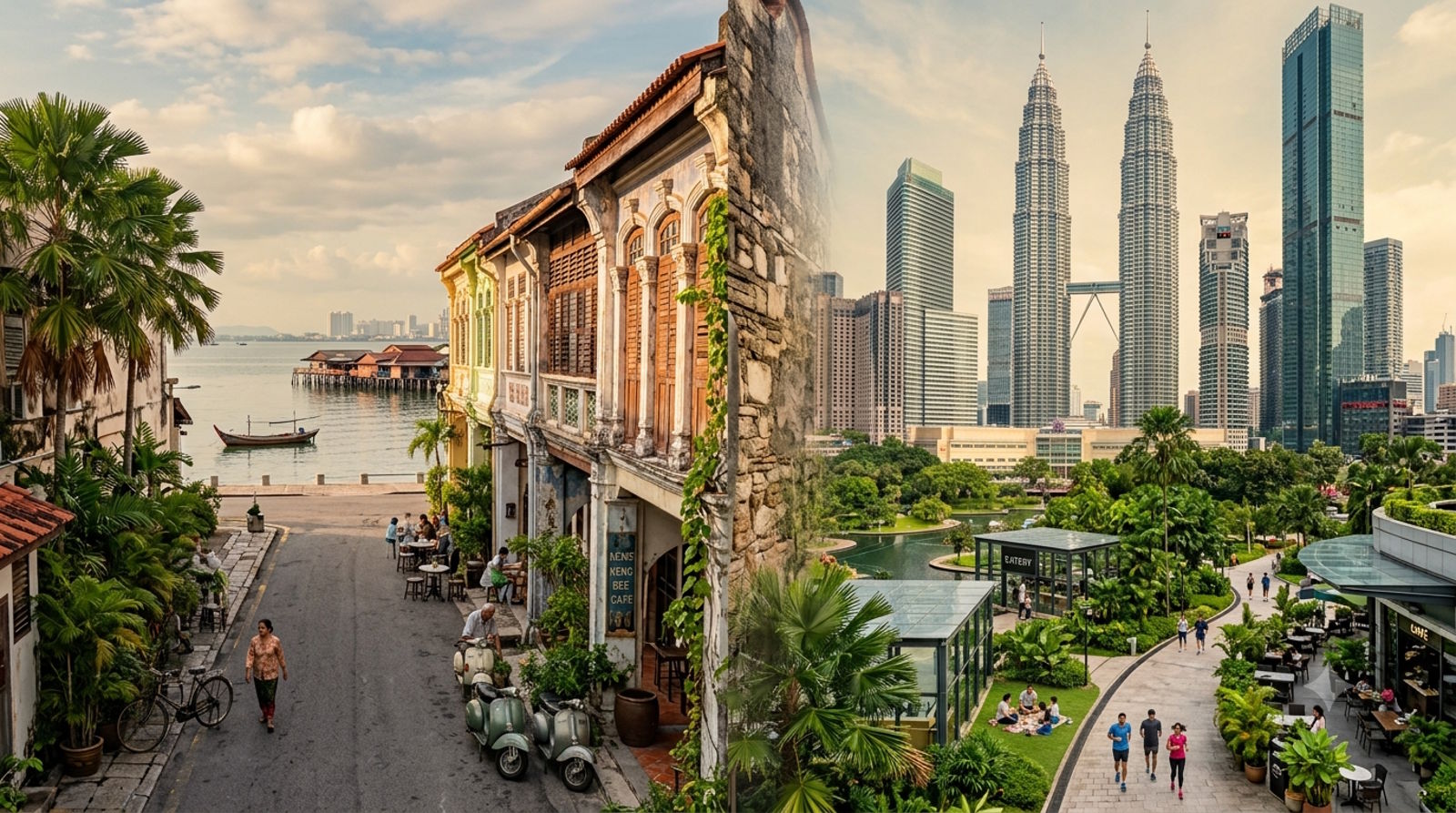
When people begin exploring Malaysia as a place to live, one question comes up again and again: Should you choose Penang or Kuala Lumpur?
- Two Very Different Versions of Malaysia
- The Daily Pace of Life
- The True Cost of Living
- Healthcare Across Both Hubs
- Getting Around: Can You Live Without a Car?
- A Feast for the Senses: The Food Scene
- Microclimates: The Weather
- Social Fabric and Ease of Integration
- Property Markets and Second Homes
- Stress-Free Long-Term Residency
- Which Stage of Life Are You In?
- Which Lifestyle Belongs to You?
- The Bottom Line
At first glance, both offer reliable infrastructure, modern healthcare, established international communities, and a manageable cost of living compared to many Western countries. Yet living in these two places feels surprisingly different. The decision is rarely about which city is objectively “better”—it is about which daily rhythm fits your life. Whether you are planning retirement, working remotely, or looking for a second home, understanding those subtle daily differences can save you from making the wrong move.
Two Very Different Versions of Malaysia
To understand the choice, it helps to imagine your daily backdrop. Kuala Lumpur is Malaysia’s bustling capital—a vertical metropolis of glass towers, neighborhood markets, and commercial centers. Yet, unlike many dense Asian capitals, Kuala Lumpur is surprisingly green. Massive tropical parks, urban rainforest reserves like the Kuala Lumpur Forest Eco Park, and the vast Perdana Botanical Gardens are woven directly into the city center, giving the capital a surprisingly breathable feel despite its modern skyline.
Penang, on the other hand, presents an island lifestyle grounded in local culture and modern conveniences. Life here revolves around coastal roads, historic quarters, and forested hillsides. While Penang has its own bustling commercial zones, it retains a relaxed, coastal atmosphere that feels miles away from the capital’s fast-paced drive.
The Daily Pace of Life
In Kuala Lumpur, life moves at a full metropolitan tempo. Your average Tuesday might start with grabbing a quick coffee in a downtown tower before a meeting, spending the afternoon navigating a fast-moving business district, and ending the evening at a quiet neighborhood bistro or a rooftop bar overlooking the skyline. There is always a new exhibition, restaurant opening, or event happening, but that energy comes with dense traffic and continuous city noise.
In Penang, the daily rhythm immediately dials down a notch. Your morning is just as likely to begin with a quiet coffee overlooking the sea or a short stroll through a neighborhood market before your work day starts. While Penang experiences its own peak-hour traffic, life feels less rushed. It is an environment where taking a mid-afternoon break for local tea or heading to the beach after work easily becomes part of your regular routine.
The True Cost of Living
It is a common misconception that Penang is simply cheaper across the board. In reality, the financial picture depends on your lifestyle choices.
Housing tells a nuanced story. While day-to-day spending on local dining is generally lower in Penang, prime residential areas like Gurney Drive or Tanjung Tokong command real estate prices that easily rival central Kuala Lumpur.
For many expats, the biggest difference isn’t the cost of living itself—it’s how easy it is to spend more in Kuala Lumpur. The capital offers an endless array of high-end gyms, specialty imported grocery stores, and international dining options that can quickly expand your monthly budget. In Penang, a simpler, locally focused lifestyle comes more naturally.
Healthcare Across Both Hubs
Malaysia is well regarded for its private healthcare system, but the daily experience differs depending on where you settle.
Penang has long been a major center for regional medical care. Its private hospitals are geographically concentrated on the island, meaning doctor visits, specialists, and routine check-ups are usually just a short drive away.
Kuala Lumpur hosts the country’s largest concentration of medical facilities and sub-specialists. While the level of expertise is high, visiting clinics or specialists often means planning your day around traffic and navigating across a larger metropolitan area.
Getting Around: Can You Live Without a Car?
One of the most frequent questions future residents ask is whether owning a vehicle is necessary. The answer depends entirely on which city you pick.
In Kuala Lumpur, the answer is a clear yes—you can easily live without owning a car. Between the MRT, LRT, Monorail, and inexpensive ride-hailing services, living in central neighborhoods like Bangsar, KLCC, or Mont Kiara without a vehicle is completely manageable.
In Penang, the answer is: it depends. While coastal areas like Tanjong Tokong or parts of George Town are wonderfully walkable for daily errands, having a car or scooter makes a significant difference if you want to explore the rest of the island, visit quieter beaches, or travel to the mainland without relying solely on buses or ride-hailing app drivers.
A Feast for the Senses: The Food Scene
Food is central to daily life in Malaysia, but each city approaches it with a different personality.
Penang’s food culture is rooted in tradition. The island is famous for its open-air hawker stalls, night markets, and family-run eateries hidden along UNESCO heritage streets. It is an unpretentious, flavor-first food scene where a memorable meal often costs just a few dollars on a bustling corner.
Kuala Lumpur excels in variety and international depth. Alongside traditional local spots, you will find modern fusion concepts, international bakeries, and regional cuisines from around the globe. If you enjoy trying new culinary trends or dining out at international restaurants, Kuala Lumpur offers endless variety right on your doorstep.
Microclimates: The Weather
While both destinations stay warm year-round, subtle geographic factors shape the local weather.
Penang benefits directly from its ocean surroundings. Coastal breezes help soften the humidity, especially along northern beaches and elevated areas, making outdoor mornings feel relatively comfortable.
Kuala Lumpur experiences a noticeable “urban heat island” effect. Concrete, glass, and tall structures trap heat during the day, making the city feel warmer and muggier. Regular afternoon rain showers bring brief relief, but the air in the capital stays consistently tropical and warm.
Social Fabric and Ease of Integration
Building a social circle in a new country relies heavily on who surrounds you.
Penang tends to attract retirees, long-term expats, and people looking to settle into a steady routine. Because the community footprint is smaller, making acquaintances happens naturally. You tend to run into the same familiar faces at local cafés and neighborhood events.
Kuala Lumpur draws a diverse, fast-moving international crowd—including professionals, diplomats, founders, and digital nomads. The social scene is broad and active, making it easy to meet people from all walks of life, though social circles can feel more transient compared to Penang.
Language also makes settling in remarkably straightforward in both cities. English is widely used across Malaysia in business, healthcare, and daily errands. Whether you are setting up utilities, speaking with a doctor, or chatting with neighbors, communication barriers are rare, making the move far easier for international residents.
Property Markets and Second Homes
For those exploring a residence or a long-term property option, local real estate reflects each city’s underlying character.
In Kuala Lumpur, the market is defined by high-rise condominiums with extensive amenities—such as infinity pools, shared workspaces, and direct access to transit or shopping malls. Buyers looking for rental opportunities or urban conveniences often focus on central Kuala Lumpur.
Penang’s market is shaped by geographical limits. Land on the island is finite, giving sea-view apartments, coastal condos, and restored heritage homes a distinct long-term appeal. Buyers here are typically focused on personal lifestyle choices rather than pure yield.
Stress-Free Long-Term Residency
Malaysia offers several long-term residency pathways, including the Malaysia My Second Home (MM2H) program, although requirements and visa conditions can change over time.
For those who secure long-term status, living in Malaysia comes with practical ease. Multi-year residency options allow expats and retirees to settle down comfortably without constant administrative friction or repetitive reporting duties, allowing residents to focus on enjoying daily life.
Which Stage of Life Are You In?
Ultimately, your experience in Malaysia will depend less on the destination itself and more on where you are in life.
Someone in their thirties building a business, networking, or raising young kids might thrive on the energy, transit connections, and international school options in Kuala Lumpur. Meanwhile, a retired couple seeking quieter mornings, coastal walks, and a close-knit neighborhood network may find Penang aligns perfectly with their priorities.
Neither city changes its fundamental nature—but your personal priorities will evolve over time.
Which Lifestyle Belongs to You?
You Will Likely Prefer Penang If…
You appreciate a calm daily pace, ocean air, and strong local heritage. You prefer walking to a neighborhood café, eating at legendary street food stalls, and building a tight-knit community over living in a bustling metropolis.
You Will Likely Prefer Kuala Lumpur If…
You enjoy the pulse of a global city that still maintains green spaces. You value smooth public transit, modern apartment amenities, a diverse social circle, and having endless international dining and cultural choices at your doorstep.
The Bottom Line
Malaysia offers two remarkably different ways of living within the same borders. Penang appeals to those who value a slower rhythm, coastal living, and strong local character. Kuala Lumpur suits people who enjoy the energy of a global city, endless conveniences, and a constantly evolving international community.
Neither choice is objectively right for everyone—but one of them is bound to feel much more like home.