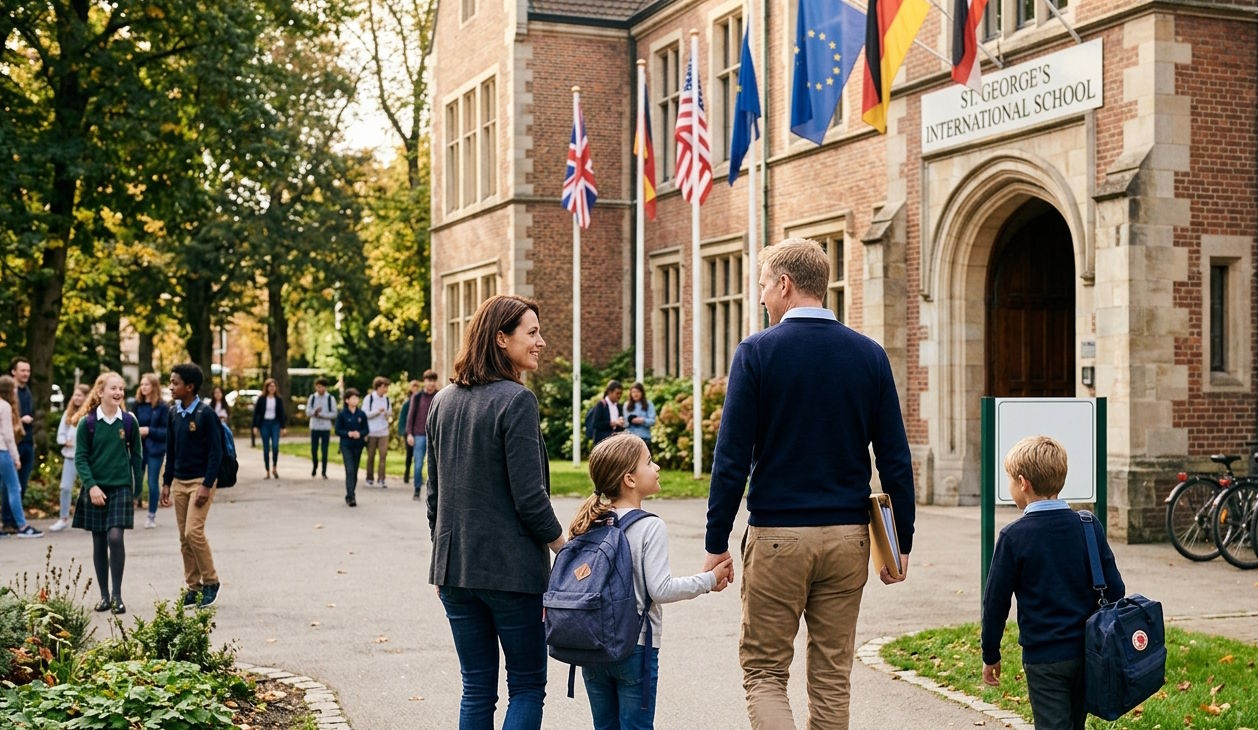
For many families considering a move abroad, the conversation usually begins with the destination itself. People compare climates, explore neighbourhoods, research healthcare systems and calculate living costs. They imagine weekend trips, new experiences and a different pace of life.
At some point, however, the focus inevitably shifts to a much more personal question.
What about the children?
For families relocating internationally, few decisions have a greater impact on daily life than choosing the right school. Yet it is also one of the most misunderstood parts of the relocation process. Many parents begin by searching for rankings, comparing tuition fees or looking for the most prestigious international school in the area. While these factors can be useful starting points, they rarely provide the full picture.
The reality is that the best school is not always the most expensive, the most famous or even the highest ranked. More often, it is the school that aligns with a family’s long-term plans and helps a child feel both challenged and supported in an unfamiliar environment.
Education Looks Different Around The World
One of the first surprises many expatriate families encounter is how differently education can be approached from one country to another.
Parents often assume that schools around the world broadly follow the same principles, only to discover that educational priorities vary considerably. In some countries, academic achievement and examination results dominate the school experience. Elsewhere, greater emphasis may be placed on creativity, independent thinking, project-based learning or student wellbeing.
These differences are not necessarily a reflection of quality. They are often a reflection of culture.
A school system that produces excellent examination results may not offer the same opportunities in the arts, sports or extracurricular development that parents are accustomed to at home. Likewise, a school known for encouraging creativity and self-expression may follow a very different academic structure than one focused on traditional testing.
Understanding these differences early can help families avoid disappointment and make decisions based on reality rather than expectation.
Why Rankings Only Tell Part Of The Story
School rankings can be useful, but they rarely capture the factors that matter most in everyday life.
A school may achieve exceptional academic results while offering a learning environment that simply does not suit a particular child. Another may rank lower on paper yet provide stronger pastoral care, a more welcoming community or a broader range of activities that contribute to a student’s overall development.
Parents naturally want the best possible education for their children, but educational success is about far more than examination scores. Confidence, social development, emotional wellbeing and a sense of belonging often play an equally important role in shaping a child’s experience.
For this reason, many families eventually discover that the right question is not “Which school is considered the best?” but rather “Which school is likely to be the best fit for our child?”
The answer is rarely found in a ranking table.
Looking Beyond The Classroom
When families evaluate schools abroad, academic programmes understandably receive most of the attention. Yet some of the most significant differences between schools are often found outside the classroom.
In one country, extensive music programmes, theatre productions, sports academies, robotics clubs and debate competitions may form a central part of student life. In another, the focus may remain firmly on academic performance, with fewer resources dedicated to extracurricular activities.
Neither approach is inherently better. They simply reflect different educational philosophies.
Families are sometimes surprised to discover that activities they considered standard at home are not always available elsewhere. A child who thrives through music, performing arts, competitive sport or creative projects may have very different needs than a child whose primary interests are academic.
This is why experienced expatriate families often encourage newcomers to look beyond examination results and explore the wider educational environment. The experiences children have outside the classroom can be just as important as those that take place within it.
Understanding Future Pathways
One of the most important considerations is often overlooked during the excitement of planning an international move.
What happens after graduation?
Different schools follow different curricula, including the International Baccalaureate (IB), British, American, European or national education systems. While these distinctions may seem unimportant when children are young, they can become highly relevant when university applications begin.
A curriculum that works perfectly for one family’s future plans may create unnecessary complications for another.
Families considering a long-term relocation are often well advised to think several years ahead and understand how a particular educational pathway may influence future opportunities. The decision is not simply about where a child will attend school next year. It is also about keeping future options open.
The Hidden Cost Of Education Abroad
School fees are among the most commonly discussed aspects of international education, yet tuition is often only one part of the financial picture.
Application fees, enrolment charges, uniforms, transportation, technology requirements, school trips, examination fees and extracurricular programmes can significantly increase the overall cost of attendance.
For families moving abroad, these expenses sometimes come as a surprise, particularly when they are already managing relocation costs, housing expenses and healthcare arrangements.
A realistic assessment of educational costs is therefore just as important as understanding local property prices or living expenses. Choosing a school that fits comfortably within a family’s long-term financial plans can help avoid difficult decisions later.
The Importance Of Community
Education is not solely about curriculum and qualifications.
For children adapting to a new country, school often becomes the centre of their social world. Friendships, support networks and a sense of belonging frequently develop through the school community, making the overall environment just as important as academic performance.
A child who feels comfortable, supported and engaged is often better positioned to succeed than one attending a more prestigious institution where they struggle to settle.
This human element is sometimes overlooked during the school selection process, yet it can have a profound influence on a family’s overall relocation experience.
International Or Local?
One of the most common questions expatriate families face is whether to choose an international school or a local one.
International schools often provide familiar curricula, multicultural environments and smoother transitions for families who expect to move between countries. Local schools, on the other hand, may offer deeper cultural immersion, stronger language acquisition and a closer connection to the local community.
Both options have clear advantages, and the right choice depends largely on a family’s circumstances, priorities and future plans.
There is rarely a universally correct answer.
What matters is understanding the opportunities and challenges associated with each path before making a decision.
Final Thoughts
When people imagine life abroad, they often focus on destinations, properties and lifestyle opportunities. For families, however, the school decision frequently becomes one of the most important factors in determining whether a move ultimately feels successful.
The strongest choices are rarely based on rankings alone. They emerge from a careful understanding of curriculum, community, future pathways, extracurricular opportunities, financial considerations and, perhaps most importantly, the individual needs of the child.
In the end, the best school abroad is not necessarily the most prestigious one.
It is the one that allows a child to learn, grow, build confidence and feel at home while navigating a new chapter of life in an unfamiliar country.
Have You Navigated The School Search Abroad?
Every family approaches education differently, and the challenges of choosing a school abroad can vary significantly from one destination to another.
If you have experience with international education, we’d love to hear the lessons, surprises and insights you discovered along the way.