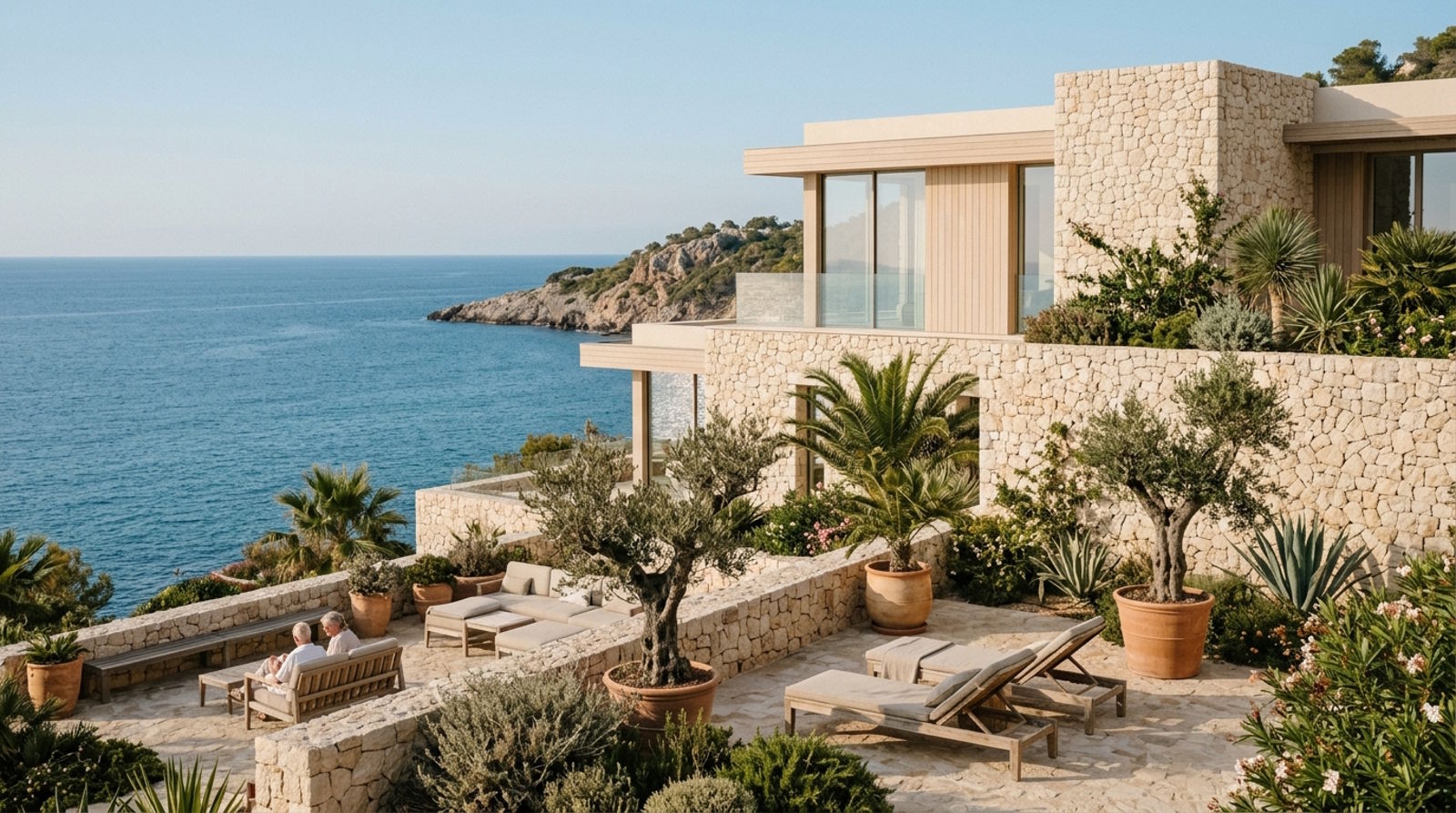
From private villas and branded residences to thoughtfully designed residential communities, choosing a home abroad is about much more than finding a beautiful place to live.
- Key Takeaways
- A Different Approach to Living Abroad
- When Is the Right Time to Consider a Retirement Community?
- Different Residential Concepts for Different Lifestyles
- Is a Branded Residence Just as Good an Alternative?
- Why a Trial Stay Can Be More Valuable Than a Property Viewing
- Buying, Renting, and Understanding the Financial Commitment
- What Happens If You Want to Leave?
- The Importance of Good Management
- Community Life Without Losing Your Independence
- Everyday Convenience and the Freedom to Adapt
- Choosing the Right Environment for Your Next Chapter
- Frequently Asked Questions
- What is a retirement community abroad?
- What is the difference between independent living and assisted living?
- At what age should you consider a retirement community?
- Can you try living in a retirement community before buying?
- Is it better to buy or rent in a retirement community abroad?
- Can you sell your property or leave a retirement community?
- Does buying property in a retirement community guarantee residency rights?
- Are branded residences suitable for retirement abroad?
- Do retirement communities provide medical care?
- What should you consider before choosing a retirement community overseas?
- Developing a Different Kind of Community?
- Introduce your project to The Curated Bucketlist.
There is something wonderfully appealing about imagining the next chapter of life in a different country. A home overlooking the Mediterranean, a villa surrounded by tropical gardens, or an apartment in a lively coastal town can represent years of ambition finally becoming reality. For many international buyers, the attraction is not simply a change of address, but the opportunity to create a different rhythm of life.
Yet finding the right property and finding the right place to live are not always the same thing. A beautiful house may provide privacy and comfort, but it does not necessarily offer companionship, convenient services, or the sense of belonging that makes a new country feel like home.
This is where retirement communities abroad are becoming an interesting part of the international residential landscape. Some are intimate collections of privately owned homes, others resemble serviced residential resorts, and a few incorporate professional assistance for residents who need additional support. Their approaches differ considerably, but they share an ambition to offer more than a property alone.
For prospective residents, however, the choice is rarely as simple as deciding between independent living and a retirement community. A branded residence, a well-managed apartment, or a private villa in an established neighborhood may provide an equally satisfying lifestyle.
The real question is which environment offers the right balance of independence, convenience, privacy, and human connection.
Key Takeaways
- Retirement communities abroad range from independent residential developments to serviced living environments and specialized care residences.
- Choosing the right property involves more than location and architecture. Community life, management quality, and everyday convenience can be equally important.
- Trial stays and extended visits offer valuable insight into whether a residential concept suits personal expectations.
- Ownership, rental, and long-term occupancy agreements can involve different rights, financial obligations, and exit conditions.
- Branded residences and private villas remain attractive alternatives, particularly for people who value flexibility and a multigenerational environment.
- A successful long-term residential concept should offer clear management arrangements, practical services, and the freedom to adapt when circumstances change.
A Different Approach to Living Abroad
International retirement has traditionally been associated with a familiar collection of attractions: warmer weather, attractive property prices, a relaxed lifestyle, and the possibility of enjoying more leisure time.
Those considerations remain important, but they tell only part of the story. Living abroad also means establishing routines, building friendships, managing a home, and finding a comfortable place within a new social environment.
For some people, this happens naturally. They settle into an established neighborhood, become familiar with local businesses, and develop friendships through shared interests. Others find that creating a social network in a new country requires more effort than expected, particularly when language differences or a highly transient expatriate population make lasting relationships difficult.
Purpose-designed residential communities attempt to address some of these challenges through shared spaces, organized services, and opportunities for residents to meet one another.
The result can be appealing, particularly for people who want the privacy of their own home without feeling disconnected from those around them. Yet the presence of communal facilities does not automatically create a genuine community. Much depends on the residents themselves, the atmosphere of the development, and the way everyday life is organized.
A residential project may be beautifully designed and still feel surprisingly impersonal. Conversely, a modest collection of homes can develop a strong sense of belonging without extensive amenities.
The distinction lies in how people actually live there.
When Is the Right Time to Consider a Retirement Community?
Exploring different residential concepts does not have to begin at retirement age.
Someone in their fifties may already be considering a second home overseas, planning a gradual transition away from full-time work, or dividing the year between two countries. This can be an ideal period to explore different destinations and living arrangements without the pressure of making an immediate decision.
Others begin looking for a different residential environment after retirement, perhaps because they want fewer household responsibilities, a more convenient location, or greater opportunities for social interaction.
There is no universally appropriate age. A person in their late seventies may be perfectly happy managing an independent home, while someone considerably younger may prefer the simplicity of a serviced residence.
The more useful consideration is lifestyle rather than age. How much time will be spent at the property? Is travel an important part of everyday life? Does the owner enjoy maintaining a garden and managing household staff, or would they rather leave those responsibilities to someone else?
Thinking about these preferences early creates room to explore possibilities rather than making a decision primarily in response to changing circumstances.
Different Residential Concepts for Different Lifestyles
The term retirement community covers a surprisingly broad range of arrangements, and the distinctions between them are worth understanding.
Independent Living Communities
Independent living communities typically consist of private houses, villas, or apartments within a development designed to encourage social interaction and simplify everyday life.
Residents maintain their own households and personal routines, while shared facilities may include gardens, swimming pools, restaurants, fitness areas, or community spaces.
Some developments provide housekeeping, maintenance, transportation, or concierge services. Others operate more like conventional residential neighborhoods, with relatively limited centralized management.
These communities can appeal to people who value privacy but appreciate the opportunity to meet neighbors with similar interests or lifestyles.
Serviced Residential Communities
Serviced residential concepts place greater emphasis on convenience. Accommodation may be rented or owned, depending on the development, while services such as housekeeping, dining, transportation, security, and property management are provided through a central operator.
The experience can resemble living in a residential resort, particularly where hospitality services are a defining feature.
However, the availability of services should never be assumed from the property’s appearance or marketing description. A development with a restaurant and reception desk may offer a very different level of assistance from one with comprehensive residential management.
Communities With Assisted Living
Some residential developments provide additional support for people who need assistance with everyday activities. Depending on the operator and applicable regulations, this may include help with personal care, medication management, or access to professional nursing services.
These arrangements are fundamentally different from independent residential communities, even when both offer attractive accommodation and shared facilities.
Prospective residents should establish whether assistance is provided directly by qualified staff, arranged through external providers, or available only under separate contracts.
The distinction becomes particularly important when a community advertises the possibility of remaining in the same residence as personal needs change.
Is a Branded Residence Just as Good an Alternative?
For many international buyers, absolutely.
A well-managed branded residence can offer an appealing combination of privacy, convenience, security, and professional property management. Depending on the development, owners may have access to concierge services, housekeeping, restaurants, wellness facilities, and assistance with maintaining their homes during extended absences.
Unlike communities designed primarily for retirees, branded residences often attract a broader mix of residents. Families, working professionals, second-home owners, and older residents may share the same development, creating a more varied social environment.
For someone who enjoys traveling, entertaining, and spending time in different countries, this can be an ideal arrangement.
Private villas and conventional apartments offer their own advantages. They may provide greater flexibility over household arrangements, visiting guests, pets, and the choice of service providers. Owners can also become part of an established local neighborhood rather than a purpose-built residential community.
The trade-off is that managing a private property can require more personal involvement, particularly when the owner spends considerable time overseas.
A retirement community is therefore not necessarily an upgrade from a branded residence or private home. It is simply another residential model, with a different emphasis on shared living, services, and social connection.
The most suitable choice depends on the individual rather than the category of property.
Why a Trial Stay Can Be More Valuable Than a Property Viewing
A beautifully presented development can make an immediate impression. Carefully maintained gardens, attractive architecture, and inviting communal areas create a convincing picture of the lifestyle on offer.
Yet the experience of living somewhere can be very different from visiting it.
Before purchasing a property or entering into a long-term residential agreement, prospective residents should investigate whether an extended trial stay is possible. Some communities offer short-term rentals or introductory accommodation, while others allow only conventional property viewings.
Spending several weeks in the development can reveal details that are difficult to appreciate during a guided visit.
The atmosphere of communal spaces, the relationship between residents and management, and the extent to which facilities are genuinely used all contribute to everyday life. A community that feels lively during the tourist season may be considerably quieter at other times of the year.
It is also worth exploring the surrounding neighborhood independently. Restaurants, shopping facilities, cultural activities, and opportunities to meet people outside the development may ultimately matter more than another beautifully furnished communal lounge.
Where possible, speaking privately with existing residents can provide valuable insight into the reality behind the marketing.
A trial stay is not about finding a place without imperfections. It is about discovering whether its particular advantages and limitations are compatible with the life one wants to lead.
Buying, Renting, and Understanding the Financial Commitment
Retirement communities abroad do not follow a single ownership model.
Some developments offer conventional residential properties for purchase, subject to local ownership laws. Others operate on a rental basis, while certain communities use long-term leases, membership arrangements, or contractual occupancy rights.
These structures can create very different financial obligations.
A purchase may involve an initial property price together with recurring management fees, maintenance contributions, and charges for optional services. Rental arrangements may include some facilities within the monthly payment while billing separately for dining, transportation, or personal assistance.
Long-term occupancy agreements require particular attention because residents may not acquire the same rights they would receive through conventional property ownership.
The legal position becomes more complex in countries where foreign nationals face restrictions on land ownership or where residential developments operate through specialized corporate structures.
Prospective residents should also understand the financial position of the community itself. A development dependent on a single operator or developer may face difficulties if occupancy remains low, promised facilities are delayed, or the management company changes.
Clear contracts, transparent service charges, and realistic operating budgets are essential to the long-term credibility of a residential concept.
Property ownership must also be distinguished from immigration status. Buying or renting a home abroad does not automatically provide the right to live in the country indefinitely. Residency permits, financial requirements, insurance obligations, and renewal conditions vary by destination and should be verified independently.
Establishing residence overseas may also affect taxation, pension income, and inheritance arrangements. Anyone making a substantial financial commitment should obtain appropriate independent legal and cross-border tax advice before proceeding.
What Happens If You Want to Leave?
A residential community should be a place people choose to live, not somewhere they feel financially trapped.
Circumstances can change for many reasons. A couple may decide to return closer to family, an individual may wish to experience another country, or a development may simply turn out to be less suitable than expected.
For renters, the main considerations are usually notice periods, deposits, contract duration, and the conditions under which service agreements can be terminated.
Property owners should examine whether they can sell freely, whether buyers must meet age or membership requirements, and whether the management company has approval rights over transfers.
Some residential arrangements include deferred fees, transfer charges, or other financial obligations that become payable when a resident leaves.
The ability to rent out a property during an extended absence may also be restricted, particularly in communities designed for permanent residents rather than short-term visitors.
These provisions deserve careful consideration before signing, rather than being discovered when circumstances have already changed.
The Importance of Good Management
A residential community is not simply a collection of buildings. It is an ongoing operation that requires reliable management, financial planning, and a clear understanding of residents’ expectations.
The quality of the operator can influence almost every aspect of daily life, from maintenance and security to the atmosphere of shared spaces.
Prospective residents should understand who is responsible for the development after construction is completed. Does the original developer continue to manage the property, or will responsibility transfer to an independent company or residents’ association?
How are service charges determined? Is there a reserve fund for major repairs? Can residents participate in decisions concerning communal facilities or changes to management?
These questions become particularly relevant in new developments where the promised lifestyle depends on facilities that have not yet been completed.
A restaurant, clubhouse, transportation service, or wellness center may look impressive in a master plan, but its long-term viability depends on sufficient funding and ongoing demand.
The most convincing communities are those in which the operational arrangements receive as much attention as the architectural design.
Community Life Without Losing Your Independence
One of the strongest arguments for residential communities is the opportunity to develop friendships more naturally.
Moving to another country often means leaving behind familiar social networks. While some people quickly establish new connections, others find that friendships take longer to develop than anticipated.
Shared gardens, communal dining spaces, social gatherings, and recreational facilities can create opportunities for conversation without requiring residents to organize everything themselves.
However, successful community life depends on more than proximity.
A development occupied largely by seasonal residents may have a different atmosphere from one where people live throughout the year. A community designed around a single nationality or language may offer familiarity, but it can also limit interaction with the wider local population.
Neither arrangement is automatically better. Some people appreciate a familiar cultural environment, while others deliberately move abroad to experience a more international way of life.
The important consideration is whether residents retain the freedom to build their own social relationships, both within the development and beyond it.
Community should be an opportunity, not an obligation. A welcoming environment respects those who enjoy organized activities just as much as those who prefer quieter routines and greater privacy.
Everyday Convenience and the Freedom to Adapt
The practical details of residential life often reveal more about a development than its most prominent amenities.
Reliable property maintenance, convenient transportation, and flexible household services can make an enormous difference to residents who travel frequently or prefer not to manage every aspect of their home.
Pet policies are another consideration. A development may welcome animals but impose restrictions on size, breed, or access to communal spaces. For owners who travel regularly, the availability of reliable pet care may be particularly valuable.
Family visits deserve similar attention. Some communities offer guest accommodations, while others restrict the duration of visits or impose additional charges.
As personal circumstances change, accessibility and practical support may become more important. A well-designed residential environment should consider convenient pathways, access to transportation, and the availability of assistance without unnecessarily limiting independence.
Healthcare is part of this picture, but it should not be confused with residential hospitality. A community offering wellness programs or occasional medical visits does not necessarily provide professional nursing care, and conventional health insurance may not cover long-term personal assistance.
Access to appropriate medical facilities and sustainable insurance arrangements should therefore be considered separately from the residential services being offered.
For a more detailed examination of healthcare costs, insurance coverage, and the financial realities of later life overseas, see our article Retiring Abroad After 60: Can You Still Afford It at 80?
Choosing the Right Environment for Your Next Chapter
A successful international home is not defined by the age of its residents or the number of facilities listed in its brochure.
For one person, the ideal arrangement may be a private villa with a garden and complete freedom over everyday life. For another, it may be a branded residence where professional management makes frequent travel effortless.
Others may find that a smaller residential community provides the right combination of privacy, companionship, and practical convenience.
These choices reflect different priorities rather than different levels of ambition.
The appeal of living abroad has always been connected to the possibility of shaping life on one’s own terms. That freedom should remain central when choosing a home for the years ahead.
Thoughtfully designed residential communities can offer a compelling alternative, particularly when they combine good architecture with dependable management and an atmosphere in which residents genuinely enjoy spending time.
But no single model can provide the perfect answer for everyone.
Ultimately, the most desirable home abroad is not simply somewhere beautiful to live today. It is a place that continues to feel right as life evolves.
Frequently Asked Questions
What is a retirement community abroad?
A retirement community abroad is a residential development or managed living environment intended primarily for older adults. Depending on the concept, it may offer independent houses or apartments, shared facilities, hospitality services, transportation, or additional assistance with everyday activities.
What is the difference between independent living and assisted living?
Independent living is designed for residents who manage their own daily activities but may appreciate shared amenities and optional services. Assisted living provides additional personal support, although the exact services, staffing, and regulatory standards vary by country and operator.
At what age should you consider a retirement community?
There is no universally appropriate age. Some people explore residential communities while planning a future retirement, while others consider them after spending many years in an independent home. Lifestyle preferences, personal circumstances, and long-term plans are generally more important than a specific birthday.
Can you try living in a retirement community before buying?
Some communities offer trial stays, short-term rentals, or introductory accommodation. Others provide only property viewings. Prospective residents should ask whether an extended stay is possible before making a substantial financial commitment.
Is it better to buy or rent in a retirement community abroad?
Buying may offer long-term stability and potential resale value, while renting generally provides greater flexibility. The appropriate choice depends on local property laws, financial circumstances, ongoing fees, and the conditions attached to the agreement.
Can you sell your property or leave a retirement community?
Often yes, but the conditions vary. Some developments impose resale restrictions, management approval requirements, transfer charges, or exit fees. These provisions should be reviewed before signing a purchase or occupancy agreement.
Does buying property in a retirement community guarantee residency rights?
No. Property ownership and immigration status are separate legal matters. Buyers should verify the applicable visa or residence permit requirements before making long-term plans.
Are branded residences suitable for retirement abroad?
Yes. Branded residences can be particularly attractive to international residents who value professional property management, hospitality services, privacy, and a multigenerational residential environment. The available services and ownership arrangements depend on the individual development.
Do retirement communities provide medical care?
Not necessarily. Some communities offer only residential and hospitality services, while others provide personal assistance or professional nursing care. The exact level of support should be confirmed directly with the operator.
What should you consider before choosing a retirement community overseas?
Important considerations include the residential atmosphere, management quality, property ownership or rental terms, ongoing fees, residency rights, transportation, healthcare access, community rules, and the flexibility to relocate if circumstances change.
Developing a Different Kind of Community?
The Curated Bucketlist explores distinctive residential concepts and new approaches to international living.
If you are developing or operating an innovative retirement community, an independent living development, or a thoughtfully designed residential project that deserves international attention, we would be interested in hearing your story.
Introduce your project to The Curated Bucketlist.
Projects are considered individually for editorial coverage. Submission does not guarantee publication.