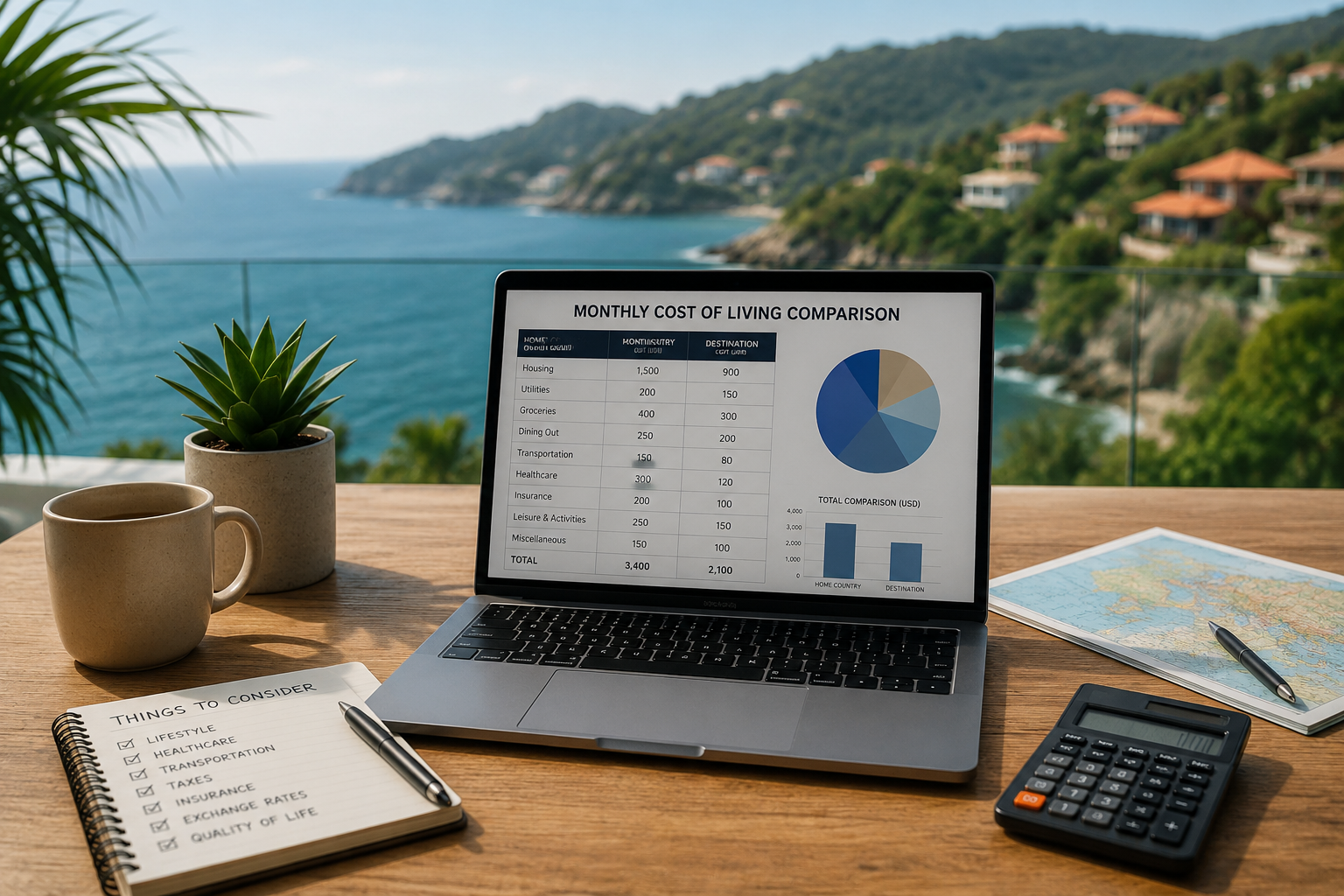
For many people considering a move abroad, purchasing a second home or investing in an overseas property, one question usually comes first:
How much does it cost to live there?
At first glance, the answer appears easy to find. Countless websites compare rents, grocery prices, utility bills and average monthly expenses across different countries. Social media is filled with videos promoting destinations where life supposedly costs a fraction of what it does back home.
While these comparisons can be useful, they rarely tell the full story.
The reality is that the cost of living is about far more than numbers on a spreadsheet. It is influenced by lifestyle choices, personal priorities, local market conditions and long-term financial considerations that are often overlooked during the early stages of planning.
Understanding these factors can help future residents, second-home buyers and investors make more informed decisions about where they choose to live.
Looking Beyond Housing Costs
One of the most common mistakes people make when comparing destinations is focusing primarily on property prices or rental costs.
Housing is undoubtedly an important part of any budget, but it represents only one piece of a much larger picture.
Healthcare, transportation, insurance, education, communications, travel expenses and everyday spending habits all contribute to the true cost of living. A destination with attractive property prices may offer a very different financial reality once these additional factors are taken into account.
The affordability of a location is rarely determined by housing costs alone.
Lifestyle Often Matters More Than Location
Two people can live in the same city and experience completely different costs of living.
One person may choose local restaurants, public transportation and a modest apartment in a residential neighborhood. Another may prefer imported products, private healthcare, premium residential developments and frequent international travel.
Both individuals live in the same destination, yet their monthly budgets may differ significantly.
This is why comparisons between countries can sometimes be misleading. The question is not only where you want to live, but also how you intend to live once you arrive.
Lifestyle choices often have a greater impact on long-term expenses than the destination itself.
Understanding Different Market Segments
Many international destinations serve a variety of audiences at the same time.
Local residents, long-term expatriates, second-home owners, retirees and international investors often participate in different segments of the market.
For example, some residents may rely primarily on local services and products, while others prefer international schools, private healthcare facilities, imported goods or managed residential communities.
Neither approach is right or wrong. However, understanding which market segment best reflects your intended lifestyle can help create more realistic expectations about future living costs.
Looking Beyond The Purchase Price
For those considering a second home or overseas property investment, the purchase price is only part of the equation.
Property ownership often includes additional expenses such as maintenance, insurance, management fees, utilities, repairs and community charges.
Depending on the property type and location, these costs can vary considerably.
A well-informed purchase decision considers not only the acquisition cost but also the long-term cost of ownership.
Exchange Rates Can Influence Affordability
Many international residents earn income in one currency while spending money in another.
As exchange rates fluctuate, purchasing power can change even when local prices remain relatively stable.
A destination that appears highly affordable today may feel different if currency movements affect income or savings over time.
For buyers and future residents planning for the long term, exchange rates are an important factor that should not be overlooked.
Affordability Is Not Just About Price
When evaluating a destination, it is easy to focus on what things cost.
However, value is often determined by far more than price alone.
Access to quality healthcare, transportation infrastructure, international airports, schools, shopping facilities and essential services can significantly influence both quality of life and overall expenses.
In some cases, paying slightly more for a well-connected location may provide greater long-term value than choosing the lowest-cost option available.
Affordability and value are not always the same thing.
Markets Evolve Over Time
Another important consideration is that destinations change.
Areas that were once considered emerging markets can mature rapidly due to infrastructure investment, tourism growth, economic development and increasing international demand.
As a result, property prices and everyday living costs often evolve over time.
Information found in older articles, relocation forums or social media discussions may no longer reflect current market realities.
For prospective buyers and future residents, relying on current research rather than historical perceptions is essential.
The Bigger Question
The most successful relocation and property decisions rarely begin with a spreadsheet alone.
They begin with a clear understanding of personal goals, lifestyle preferences and long-term priorities.
While cost of living is certainly an important consideration, it should be viewed as one part of a much broader decision-making process.
The cheapest destination is not necessarily the best fit.
Likewise, a destination that appears more expensive on paper may offer greater value based on individual circumstances and objectives.
Ultimately, the goal is not simply to find a place that costs less.
The goal is to find a place that supports the life you want to build.
Final Thoughts
Comparing living costs between countries can provide valuable insights, but numbers alone rarely tell the whole story.
Lifestyle choices, infrastructure, property ownership costs, exchange rates and changing market conditions all play an important role in shaping the true cost of living abroad.
Before making any major decision, it is worth taking the time to understand not only what a destination costs, but also what it offers in return.
Because in the end, choosing where to live is about more than affordability.
It is about finding the right place for your next chapter.
Looking for a second home, investment property or new lifestyle destination?
Explore our country guides, international developments and second home opportunities to discover where your next chapter could begin.