Compact, remarkably diverse and still surprisingly easy to overlook, Slovenia offers something increasingly rare in Europe: the possibility of changing your surroundings without changing your country.
- A Small Country That Lives Much Larger
- Ljubljana Without the Big-City Exhaustion
- Then There Is the Coast
- Mountains, Lakes and a Different Kind of Everyday Life
- Wine Country Without the International Spectacle
- Why Happiness Rankings Are Worth Noticing — But Not Worshipping
- What Does Everyday Life Cost?
- Healthcare and the Practicalities of Staying
- Could You Actually Make Slovenia Home?
- For EU and EEA Citizens, the Door Is Relatively Open
- For Americans, Chinese Citizens and Other Non-EU Nationals, It Is Different
- A New Option for Digital Nomads
- Can Foreigners Buy Property in Slovenia?
- What to Expect From Slovenia’s Property Market
- Owning a Home and Having the Right to Live in It Are Separate Questions
- The Advantages Come With Trade-Offs
- Perhaps the Real Luxury Is Optionality
- Europe Has Louder Destinations. Slovenia Doesn’t Need to Be One of Them.
There are European countries that hardly need an introduction. Italy sells itself through food and beauty, Portugal through Atlantic light and an established international community, while Spain has spent decades perfecting the art of turning everyday life into an argument for staying.
Slovenia rarely enters the conversation quite so quickly.
Perhaps that is part of its appeal.
Wedged between Italy, Austria, Hungary and Croatia, this small Central European country occupies an unusual position, geographically as well as culturally. Alpine landscapes dominate one direction; vineyards roll across another. Head southwest and the Adriatic appears. Ljubljana offers the cafés, restaurants and cultural life of a European capital without the scale or intensity of one.
None of these qualities is particularly secret. What is changing is their relevance.
For people reconsidering where and how they want to live, Slovenia brings together several things that are becoming increasingly difficult to find in one place: manageable scale, access to nature, functioning infrastructure, distinct seasons, proximity to the rest of Europe and a lifestyle that does not depend on living in a major metropolis.
It is not the obvious European relocation story. That may be exactly the point.
A Small Country That Lives Much Larger
On a map, Slovenia looks almost improbably compact. Driving across it can take less time than crossing some European metropolitan regions.
Yet distance behaves differently here.
From Ljubljana, the Julian Alps are within easy reach. So is the Adriatic coast. Vineyards, forests, lakes and historic towns do not require elaborate travel plans or domestic flights. Italy, Austria and Croatia sit just beyond the border.
That changes everyday life in ways that statistics about a country’s size cannot capture. A weekend does not necessarily have to be planned weeks ahead, living in the capital does not mean giving up regular access to mountains, and choosing the coast does not mean becoming disconnected from the country’s economic and cultural center.
For international residents, particularly those accustomed to countries where geography dictates lifestyle, Slovenia’s compactness can feel less like a limitation than a luxury.
Ljubljana Without the Big-City Exhaustion
Ljubljana is one of those capitals that challenges the conventional definition of a capital city.
It has universities, museums, restaurants, international businesses and the practical infrastructure expected of a national center. Yet with a population well below that of Europe’s major cities, it retains an unusually human scale.
The historic center follows the Ljubljanica River, with cafés spilling onto its banks and much of the central area designed around pedestrians rather than traffic. Daily life rarely requires the logistical calculations associated with London, Paris or Berlin.
That does not mean Ljubljana is a miniature substitute for those cities. Anyone looking for endless nightlife, vast professional networks or the anonymity of a global metropolis may find it too restrained. For people who still want urban life without allowing the city to consume their life, however, that restraint can become part of the attraction.
English is widely spoken, particularly among younger Slovenians and in Ljubljana, tourism centers and internationally oriented businesses. This does not make learning Slovenian irrelevant for anyone planning to stay for years, but it can make the transition into everyday life considerably less daunting than newcomers might expect.
Then There Is the Coast
Slovenia has only a short stretch of Adriatic coastline, but what it lacks in length it compensates for in character.
Piran is the postcard: Venetian architecture, narrow lanes and a historic waterfront facing the Adriatic. Nearby Portorož is more resort-oriented, while Koper functions as a larger, more practical coastal town.
The atmosphere is distinctly different from inland Slovenia. Italian influence becomes more visible, the climate softens and the rhythm begins to feel Mediterranean.
For someone considering life in Southern Europe, this creates an interesting alternative. Slovenia offers access to the Adriatic without requiring the entire lifestyle to revolve around a large coastal resort or an intensely seasonal tourism economy.
The coast is small, certainly, but Ljubljana is roughly an hour away and Trieste sits just across the Italian border. In Slovenia, borders can sometimes feel less like edges than extensions of the neighborhood.
Mountains, Lakes and a Different Kind of Everyday Life
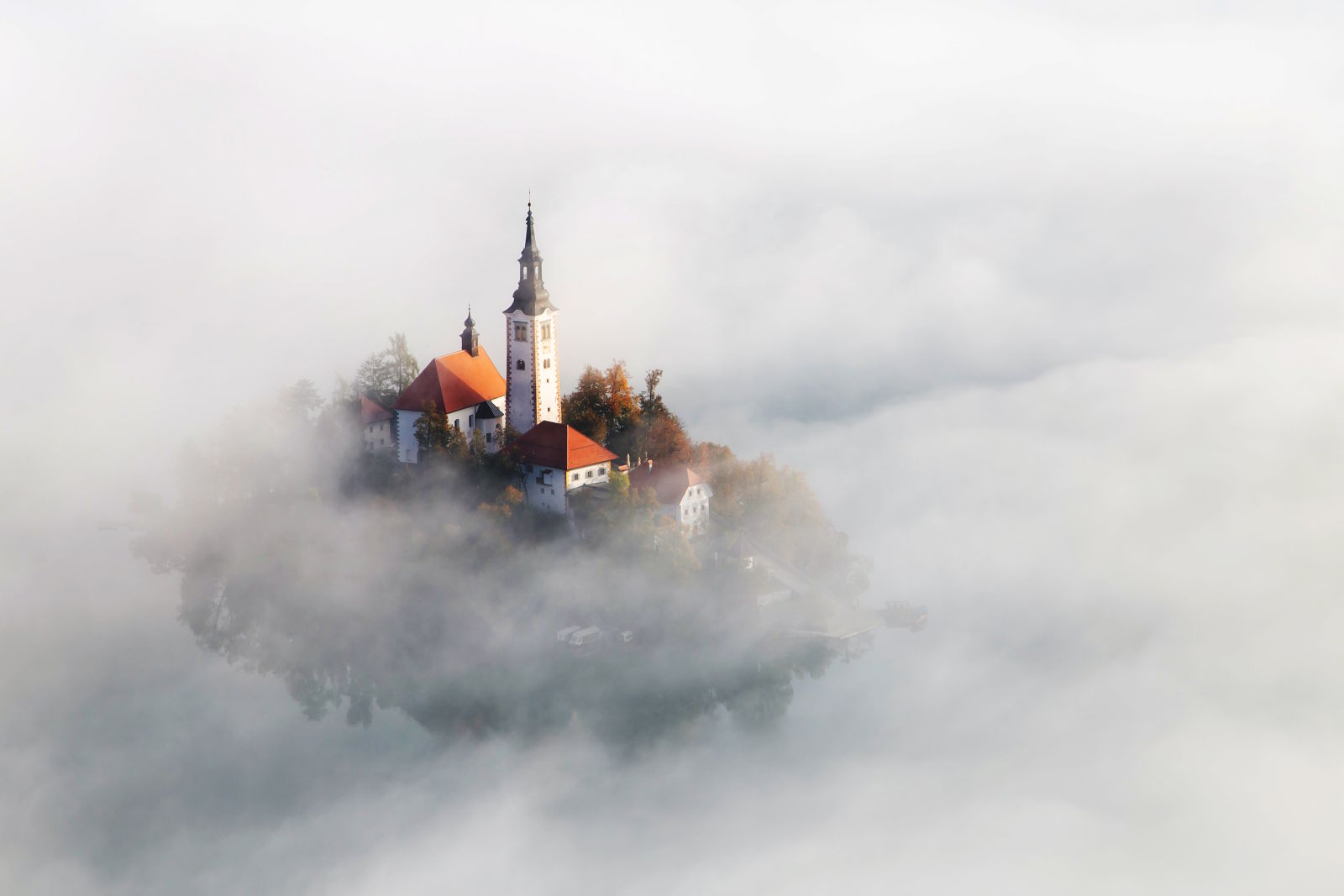
Lake Bled receives most of the international attention, and understandably so. Its island church, castle and Alpine backdrop have become shorthand for Slovenian tourism.
Living in Slovenia, however, reveals a much broader landscape.
The Julian Alps, Triglav National Park, Lake Bohinj and numerous smaller communities offer a different proposition from both Ljubljana and the coast. Outdoor life is not merely a weekend industry here. Hiking, cycling, skiing and time spent in nature are deeply embedded in the country’s culture.
That matters for people whose idea of quality of life has begun to change.
For years, the international relocation narrative often treated sunshine as the ultimate prize. Permanent heat, crowded resort destinations and heavily seasonal communities, however, do not suit everyone. Four distinct seasons, green landscapes and cooler summers can become advantages rather than compromises.
Slovenia makes that alternative unusually accessible.
Wine Country Without the International Spectacle
Travel away from the familiar Ljubljana–Bled–coast itinerary and the country changes again.
The wine landscapes of Goriška Brda and the Vipava Valley in western Slovenia, as well as the wine-growing areas surrounding Maribor in the northeast, reveal another side of the country entirely.
Vineyards, smaller towns and agricultural landscapes create a slower rhythm of life, but importantly, Slovenia’s scale means rural living does not automatically translate into isolation.
There are places in Europe where choosing the countryside means accepting significant distance from airports, hospitals, cultural life or neighboring countries. Slovenia compresses those distances, making a life outside the major urban centers considerably more practical than geography might suggest.
For second-home buyers, retirees or people imagining a life divided between several places, that can fundamentally change the equation.
Why Happiness Rankings Are Worth Noticing — But Not Worshipping
Slovenia’s strong performance in international measures of happiness and quality of life has attracted increasing attention.
Such rankings should never be mistaken for personal guarantees. A country cannot promise happiness any more than a Mediterranean climate can promise a good life. What these studies can reveal, however, are some of the conditions surrounding everyday life.
Safety, social connections, public services, environmental quality and confidence in one’s surroundings all influence how a place feels long after the novelty of moving abroad has disappeared.
Slovenia’s appeal is therefore not that a ranking declares its residents happy. It is that many of the characteristics associated with quality of life are visible in ordinary routines: accessible nature, relatively compact communities, established infrastructure and a sense that daily life does not have to involve constant logistical friction.
For someone researching a move, those conditions are ultimately more interesting than the ranking itself.
What Does Everyday Life Cost?
Slovenia is sometimes still discussed internationally as though it were a low-cost corner of Europe waiting to be discovered. That description has become increasingly difficult to sustain.
There are certainly everyday expenses that North American newcomers may find moderate by comparison with major US metropolitan areas, particularly outside Ljubljana and the most sought-after coastal destinations. Yet Slovenia should not be approached as a bargain relocation strategy.
Housing is an obvious example. Property prices have risen substantially, while desirable areas of Ljubljana and the coast can command prices that would surprise anyone arriving with outdated assumptions about Central or Eastern European real estate.
The same principle applies more broadly. A smaller city or rural region may offer a noticeably different household budget from central Ljubljana, and an international resident’s lifestyle can matter as much as the country itself. Frequent dining out, imported goods, private services and a prime urban address can quickly change the arithmetic.
Slovenia’s financial appeal is therefore better understood in terms of value and quality of life than simply low prices. For many international residents, what matters is not whether Slovenia is “cheap,” but what a given budget buys in terms of surroundings, mobility, services and access to the rest of Europe.
Healthcare and the Practicalities of Staying
Healthcare inevitably becomes part of any serious conversation about relocating, particularly for retirees and families considering a permanent move.
Slovenia has a public healthcare system built around compulsory health insurance for those who fall within the relevant insurance framework, alongside private healthcare providers. Primary care, specialist treatment and hospital services form part of the wider system.
For a foreign resident, however, the important question is not simply whether Slovenia has hospitals and doctors, but how he or she enters the system. Access and insurance obligations depend on residence status, employment and individual circumstances, while newcomers may also choose or require private coverage.
For anyone planning a permanent move rather than an extended stay, healthcare should therefore be investigated alongside residence arrangements rather than treated as an afterthought.
Could You Actually Make Slovenia Home?
Admiring Slovenia from a café beside the Ljubljanica is one thing; establishing the legal right to remain there is another. The answer depends considerably on nationality and on what someone intends to do after arriving.
For EU and EEA Citizens, the Door Is Relatively Open
Citizens of EU and EEA countries benefit from European freedom-of-movement rules and do not need a visa or residence permit simply to enter Slovenia.
They can remain for up to three months without registering their residence. Anyone intending to stay longer must obtain a residence registration certificate.
Recognized grounds include employment, self-employment, study, family reunification and other qualifying reasons. Depending on the basis of residence, applicants may need to demonstrate adequate health insurance and sufficient means of subsistence.
This is particularly relevant to people who are no longer working. A German, French, Dutch or other EU citizen does not require a special Slovenian “retirement visa” simply because he or she has stopped working. An economically inactive EU citizen may instead establish residence under the broader European framework, provided the applicable requirements, notably sufficient resources and health insurance, are satisfied.
For European retirees contemplating a move, Slovenia can therefore be considerably more accessible than the word “visa” might suggest.
For Americans, Chinese Citizens and Other Non-EU Nationals, It Is Different
Third-country nationals do not enjoy the same automatic right to establish residence.
The rules also distinguish between visiting Slovenia and actually moving there. Depending on nationality, someone may be able to visit Slovenia and the wider Schengen Area for a limited period without obtaining a visa in advance, but this does not create a right to settle permanently.
For longer stays, non-EU nationals generally require an appropriate residence permit based on a recognized purpose such as employment, study, family reunification or another qualifying ground. Those planning to take employment in Slovenia generally require the relevant residence and work authorization.
There is also an important distinction for retirees. Slovenia should not be approached as though it offered a universal retirement visa comparable to the dedicated retirement schemes available in some other countries.
Being retired and financially comfortable does not, by itself, give every third-country national an automatic right of residence. For non-EU retirees in particular, the available legal basis needs to be established before Slovenia can realistically be considered a permanent home.
A New Option for Digital Nomads
For internationally mobile professionals, however, Slovenia has recently opened another door.
Since November 2025, non-EU and non-EEA nationals have been able to apply for a temporary residence permit specifically designed for digital nomads. It is intended for people who work remotely for a company or business established outside Slovenia, or who are self-employed abroad, without entering the Slovenian labor market.
The permit can be issued for up to one year and cannot simply be extended. A new application can be submitted after a six-month interval following expiry of the previous permit.
Applicants must demonstrate sufficient financial means, currently calculated at a minimum of twice Slovenia’s average monthly net salary under the applicable official methodology.
One particularly useful provision concerns family members, who can join qualifying digital nomads without the usual waiting period associated with family reunification.
For a remote professional in New York, London, Shanghai, Toronto or Sydney, Slovenia can therefore be a realistic base for a year, although anyone hoping to remain permanently would eventually need another qualifying basis for residence.
Can Foreigners Buy Property in Slovenia?
For prospective second-home buyers, the rules surrounding property ownership add another layer to the picture, and nationality once again matters.
Citizens and legal entities from EU member states, EEA/EFTA states and OECD countries can generally acquire Slovenian real estate without requiring a separate decision establishing reciprocity.
The group is considerably broader than the European Union alone. Subject to the normal legal and property-specific requirements, buyers from countries including the United States, Canada, the United Kingdom, Australia, Japan and South Korea can therefore generally acquire Slovenian real estate directly.
This creates an important distinction between property ownership and residence. An American, for example, may be entitled to acquire an apartment in Ljubljana or a house near the coast even though the right to spend most or all of the year living there remains governed by immigration law.
For Some Nationalities, Reciprocity Comes Into Play
Citizens and legal entities from countries holding EU candidate status fall under another regime.
For these buyers, Slovenia can require a formal determination of reciprocity. In broad terms, this examines whether Slovenian citizens can acquire comparable property rights in the buyer’s country under equivalent or sufficiently similar conditions.
Where such a determination is required, the relevant procedure must be completed before ownership can be entered in the Slovenian land register.
Other Foreign Buyers Face Greater Restrictions
Not every foreign national can acquire Slovenian property directly.
Slovenia’s official guidance identifies citizens of countries outside the EU/EEA/OECD and the relevant candidate-country arrangements — including China — as generally unable to acquire direct ownership of Slovenian real estate, apart from circumstances such as qualifying inheritance.
This can create substantial differences between prospective buyers who may otherwise have very similar financial circumstances. A US citizen and a Chinese citizen interested in the same Ljubljana apartment, for example, do not necessarily have the same legal ability to acquire it directly.
International buyers should therefore establish their eligibility before committing significant time or money to a property search.
Some foreign investors may explore corporate ownership structures, but establishing a Slovenian company, purchasing property through a legal entity and obtaining personal residence rights are separate legal matters. They should not be treated as a simple workaround, and anyone considering such a structure requires appropriate Slovenian legal and tax advice.
What to Expect From Slovenia’s Property Market
Anyone still imagining Slovenia as an inexpensive property market may need to recalibrate.
According to Slovenia’s official property-market reporting for 2025, the median price of a resale apartment exceeded €3,000 per square meter nationwide for the first time, while Ljubljana passed €5,000 per square meter. Prices continued to rise during the year, with apartments and houses both recording substantial increases.
Those figures also illustrate why national averages tell only part of the story. Ljubljana, the Adriatic coast and established tourism destinations operate in a very different market from smaller towns and less internationally visible regions.
For prospective buyers, Slovenia is therefore less compelling as a bargain hunt than as a relatively small and geographically diverse European market where the capital, mountains, countryside and coast remain within unusually easy reach of one another.
Transaction costs also deserve attention. Where VAT does not apply to a property transaction, Slovenia levies a 2 percent real-estate transfer tax. The seller is generally liable for this tax under Slovenian law, although buyer and seller can agree contractually that the buyer will bear it.
As with any international property purchase, legal fees, registration, financing arrangements and the tax consequences in both Slovenia and the buyer’s home jurisdiction need to be considered alongside the headline purchase price.
Owning a Home and Having the Right to Live in It Are Separate Questions
Perhaps the most important practical distinction for an international buyer is also one of the easiest to overlook.
The legal ability to own a home in Slovenia does not automatically confer the right to reside there permanently.
A US citizen, for example, may be entitled to acquire property directly while still requiring an appropriate residence status to remain in Slovenia beyond the period allowed under immigration rules. Conversely, someone who qualifies for residence may come from a country whose citizens face restrictions on direct real-estate ownership.
For a prospective second-home buyer, the sensible approach is therefore to consider property and immigration as two parallel questions: whether the individual is legally entitled to acquire the property, and how much of the year he or she is legally entitled to spend living there.
The answers may be very different.
The Advantages Come With Trade-Offs
Legal accessibility and beautiful surroundings are only part of the equation. Slovenia will not suit everyone.
Its small size inevitably means a smaller labor market than Germany, France or the Netherlands. Ljubljana’s international scene cannot compete with Europe’s global capitals, and anyone whose professional or social life depends on the scale and constant turnover of London, Paris or Berlin may eventually find the country too quiet.
The Slovenian language is another consideration. English can make the early transition considerably easier, but building a long-term life is different from spending a few months as a visitor. Learning at least some Slovenian becomes part of participating in the place rather than simply consuming it.
The property market, too, deserves realistic expectations. Desirable areas are no longer inexpensive by default, and Slovenia’s growing international visibility has not gone unnoticed by buyers.
Then there is the weather. Although the country reaches the Adriatic, most of Slovenia is not a year-round sun destination. Winters exist, rain exists, and grey days are part of the bargain.
For some people, that will diminish its appeal. For others, particularly those who have discovered that permanent summer eventually loses some of its novelty, it may enhance it.
Perhaps the Real Luxury Is Optionality
The most compelling argument for Slovenia may ultimately be neither Ljubljana nor the Adriatic, neither the Alps nor its wine regions.
It is having them together.
A person living in Ljubljana can spend Saturday hiking in the mountains and Sunday having lunch near the Italian border. Someone based near the coast remains connected to the capital without sacrificing half a day to get there. A home among vineyards does not necessarily mean retreating from the wider world.
That kind of geographic flexibility is easy to underestimate when comparing countries on spreadsheets of tax rates, property prices and annual sunshine hours.
For people contemplating a permanent move abroad, the ability to change scenery, climate and rhythm without repeatedly packing a suitcase can make a country more livable over the long term. For those considering a second home rather than permanent relocation, Slovenia’s position between Central Europe, the Alps and the Adriatic opens an entirely different set of possibilities.
Europe Has Louder Destinations. Slovenia Doesn’t Need to Be One of Them.
Slovenia is unlikely to replace Spain, Portugal or Italy as one of Europe’s great international lifestyle magnets anytime soon.
Nor does it need to.
Its attraction lies elsewhere: in being small without feeling confined, European without feeling standardized, outdoors-oriented without requiring a retreat from urban life, and Mediterranean in one corner while unmistakably Alpine in another.
The practical possibilities are more nuanced than they initially appear. For an EU retiree, establishing a life in Slovenia may be relatively straightforward. For an American remote professional, the digital-nomad permit creates another route. For a second-home buyer from an OECD country, direct property ownership can be surprisingly accessible. Someone arriving from another part of the world may find that both residence and ownership require considerably more planning.
Those differences do not weaken Slovenia’s appeal. They simply determine for whom the country can realistically become more than a place to visit.
At a time when relocation is so often reduced to rankings of tax rates, sunshine hours and supposedly cheap property, Slovenia makes a different argument. Its strength lies less in excelling at one headline metric than in the unusual number of different lives that can fit within its borders.
For the right person, that may prove considerably more valuable.