Every year, millions of candles illuminate homes, cemeteries, and public squares across Mexico. During Día de los Muertos, families gather not to mourn the dead, but to celebrate their return. While the vibrant marigolds and iconic catrina makeup have become global symbols of Mexico, the essence of the festival lies in a profound, intimate connection that transcends the traditional boundaries of grief.
Originating from a blend of indigenous Aztec rituals and Spanish Catholic influence, this celebration is rooted in the belief that death is not the end of existence, but a natural phase in the life cycle. Unlike somber commemorations found in other cultures, Día de los Muertos is a joyous, deliberate reunion. It is a testament to the belief that as long as we remember those who have passed, they remain present in our lives.
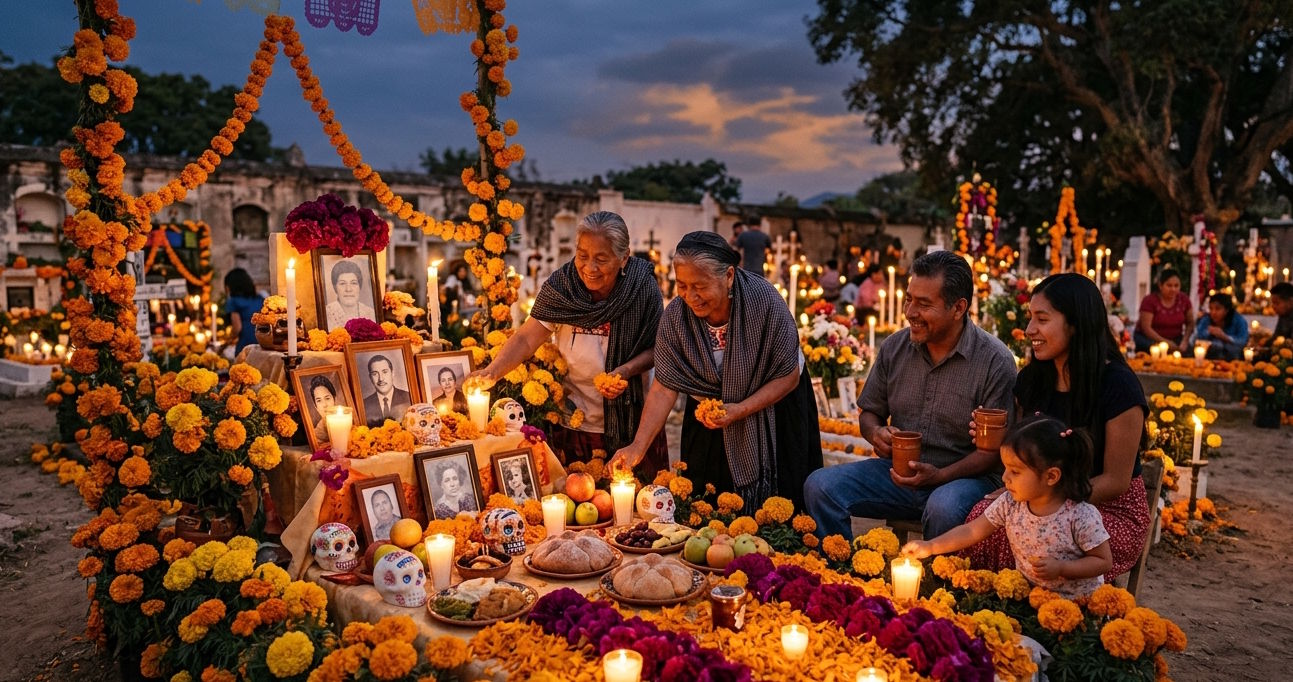
The rituals of the season—primarily observed on November 1st and 2nd—are designed to nourish the returning spirits. At the heart of every celebration is the ofrenda, or altar, which families construct in their homes or at gravesites. These spaces are deeply personal, decorated with photographs of the deceased, flickering candles to light their way, and offerings of their favorite foods and drinks. The air during these days is heavy with the scent of cempasúchil—vibrant orange marigolds known as the “flowers of the dead”—which are believed to guide the spirits back to their families. Meanwhile, the presence of pan de muerto, a sweetened, soft bread, and intricate sugar skulls serves as a gentle reminder that death is an inevitable, sweet part of the human experience.
For those looking to understand the Mexican identity, there is no better entry point than this festival. It offers a rare glimpse into a society that embraces the complexities of life and death with grace, humor, and immense love. Experiencing Día de los Muertos—whether in a quiet village or a bustling city plaza—is an exercise in perspective. It invites you to pause, reflect, and appreciate the continuity of family and tradition. In a world that often rushes forward, Día de los Muertos offers something increasingly rare: a moment to remember where we come from, who shaped our lives, and why memory itself remains one of the strongest bonds between generations.