A Country Many Travellers Never Consider
When people talk about destinations that have successfully captured the world’s imagination, the same names tend to appear again and again. Italy evokes images of culture, food and history. Portugal has reinvented itself as a destination for entrepreneurs, retirees and digital nomads. Thailand attracts millions of visitors every year with a combination of beaches, hospitality and lifestyle opportunities.
Malawi rarely appears in these conversations.
This is perhaps surprising given that the country possesses many of the qualities modern travellers claim to be searching for. It is home to one of Africa’s largest freshwater lakes, offers a remarkably relaxed pace of life and has developed a reputation for hospitality that has earned it the nickname “The Warm Heart of Africa.” Yet for decades, Malawi remained largely absent from international travel discussions, overshadowed by larger neighbours and more established tourism markets.
For many people outside Africa, the country was not so much misunderstood as simply unknown.
It was against this backdrop that Lake of Stars emerged.
More Than Another Festival
At first glance, there is little reason to believe that a music festival could influence the way an entire country is perceived. Festivals take place all over the world, many of them attracting larger audiences, bigger sponsors and internationally recognised performers.
Lake of Stars never attempted to compete on those terms.
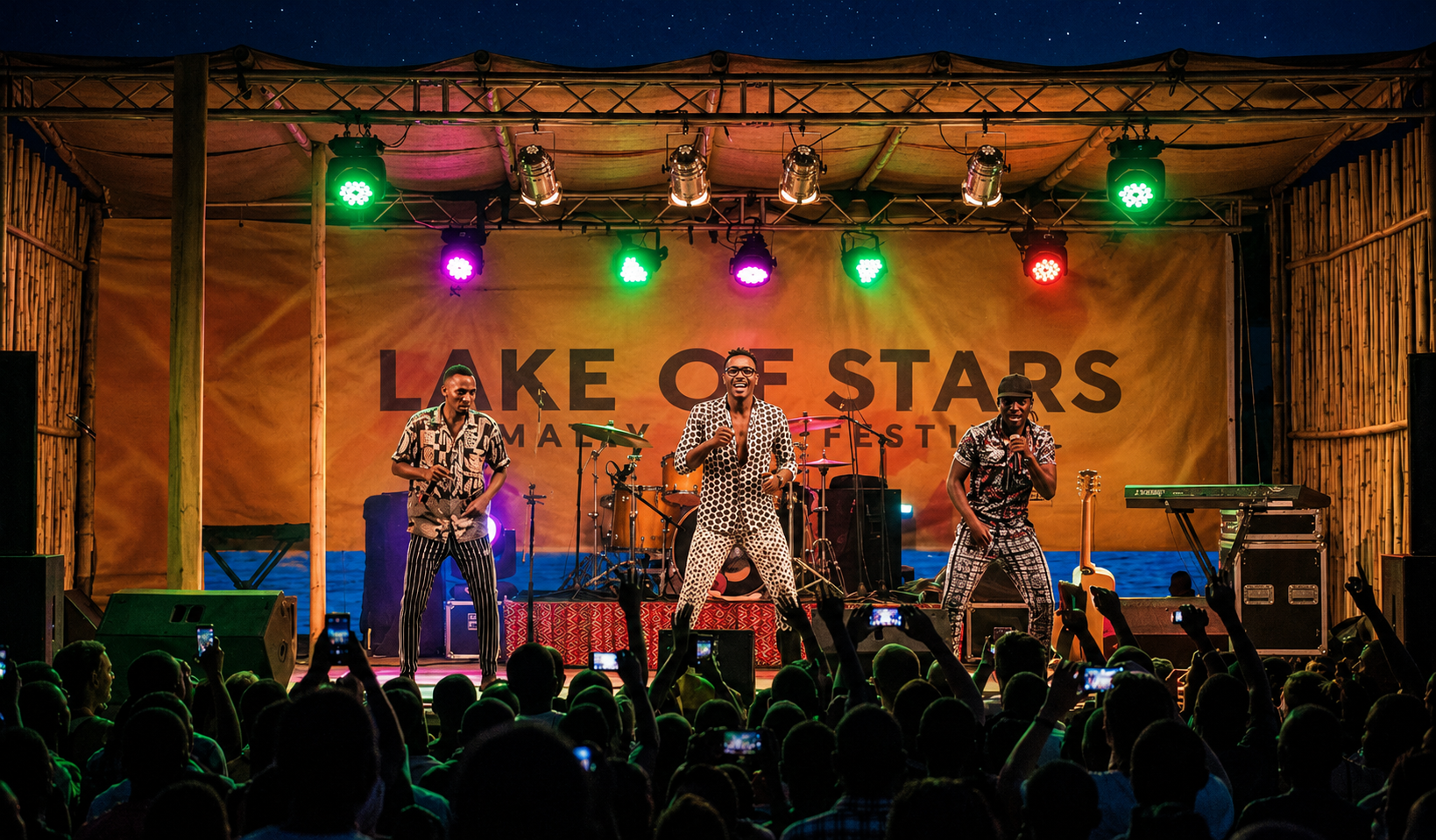
Established in 2004 on the shores of Lake Malawi, the event developed around a different idea. Rather than creating a self-contained entertainment experience, its organisers sought to build something that would introduce visitors to Malawi itself. Music provided the attraction, but the destination was always part of the story.
Over time, this distinction became increasingly important.
Visitors arrived expecting performances and cultural events. What they often encountered was a country that looked very different from the one they had imagined before booking a ticket.
Letting Visitors Draw Their Own Conclusions
One of the challenges facing smaller nations is that international perceptions are frequently shaped by people who have never been there.
Travel decisions are often influenced by headlines, assumptions and second-hand impressions. Countries become known for a handful of stories that are repeated so often they begin to define the entire destination, regardless of whether those stories accurately reflect everyday life.
Malawi has experienced this phenomenon for years.
The significance of Lake of Stars lies partly in the fact that it bypassed this process altogether. Rather than telling visitors what to think, the festival encouraged them to experience the country firsthand and reach their own conclusions.
As a result, many visitors returned home talking less about the event itself and more about the people they met, the communities they encountered and the atmosphere they experienced while travelling through the country. The festival became a gateway to a broader understanding of Malawi, offering a perspective that could never have been conveyed through advertising campaigns or tourism slogans.
Where The Festival Meets Everyday Life
Perhaps the most distinctive aspect of Lake of Stars is its relationship with its surroundings.
Many festivals exist within carefully controlled environments that could, in theory, be located almost anywhere. The event itself becomes the destination, while the location serves merely as a backdrop.
Along the shores of Lake Malawi, the opposite is true.
The festival unfolds within a landscape that remains very much alive beyond the stages and performances. Fishing boats continue to move across the lake as they have for generations. Local businesses, markets and communities continue their daily routines. Visitors find themselves sharing spaces not only with fellow festival-goers but also with the people whose lives are intertwined with the lake throughout the year.
This creates a very different experience from that offered by many large-scale international events.
Rather than feeling separated from the destination, visitors become immersed in it.
The Power Of Cultural Exchange
Throughout history, cultural events have served purposes that extend far beyond entertainment. Markets, festivals and public celebrations have long provided opportunities for communities to exchange ideas, preserve traditions and establish connections with people from different regions and backgrounds.
Lake of Stars performs a similar role in a contemporary context.
International artists share stages with Malawian performers. Visitors encounter local music, art and storytelling traditions that may otherwise never reach international audiences. At the same time, local communities engage with visitors whose understanding of the country is often transformed by the experience.
These interactions may appear small on an individual level, but collectively they have helped create a different narrative around Malawi; one shaped not by assumptions or stereotypes, but by direct experience.
Why Events Like This Matter
In an age when destinations compete aggressively for attention, it is easy to assume that visibility is achieved through larger budgets, larger developments and larger marketing campaigns.
Yet some of the most effective ambassadors a country can have are cultural events that encourage people to engage with a place on a deeper level.
Lake of Stars demonstrates that a festival can be more than an annual gathering. It can become a bridge between communities, a platform for local talent and a powerful introduction to a destination that many travellers might otherwise overlook.
More importantly, it reminds us that places are ultimately defined not by tourism statistics or promotional campaigns, but by the people who live there and the stories they choose to share.
Final Thoughts
While Lake of Stars is frequently described as one of Africa’s most distinctive music festivals, its legacy extends well beyond the performances that take place each year on the shores of Lake Malawi.
For more than two decades, the event has helped introduce international visitors to a country that often sits outside the spotlight, offering a perspective shaped by culture, community and human connection rather than preconceptions.
Some visitors arrive because of the festival.
Many leave with a lasting curiosity about Malawi itself.
Is There A Cultural Event We Should Feature?
Around the world, festivals often reveal more about a destination than guidebooks ever can. If you know of a celebration, gathering or tradition that helps tell the story of a place, we would love to hear about it.
Share your suggestion and help us discover the events, communities and traditions that make destinations truly memorable.