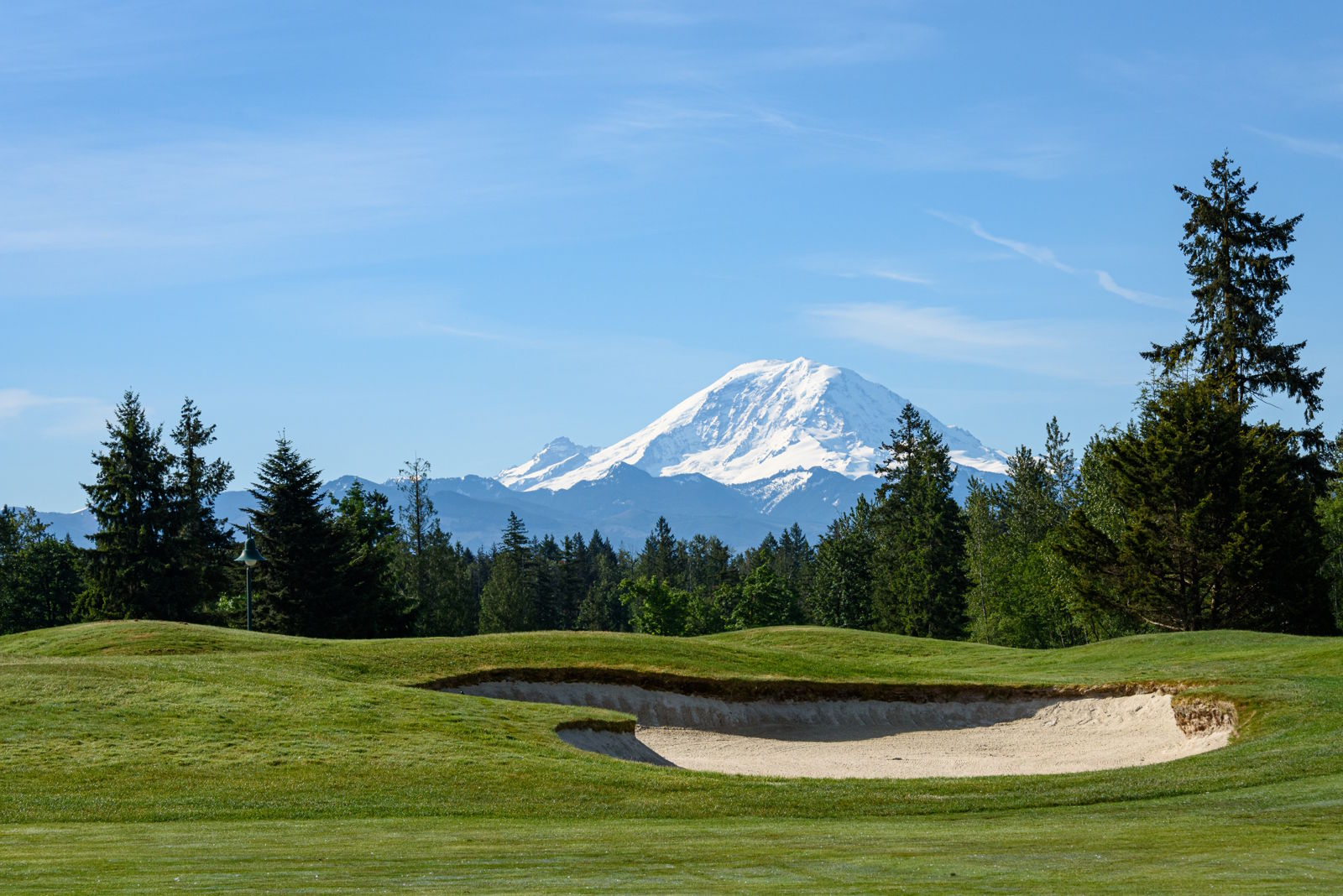
There are golf courses designed primarily to challenge a player, and there are courses whose surroundings make the final score seem almost irrelevant.
- Key Takeaways
- When Altitude Changes the Game
- Mustang, Nepal: Golf at the Edge of the Himalayas
- Yak Golf Course, India: The Official Roof of Golf
- La Paz, Bolivia: Golf Among the Andes
- Jade Dragon Snow Mountain, China: When 8,500 Yards Make Sense
- Sugadaira, Japan: Golf in the Japanese Highlands
- Gulmarg, Kashmir: A Summer Game in a Winter Landscape
- Colorado: Where Golf Becomes Part of Mountain Life
- Tignes, France: Europe’s Highest 18-Hole Course
- Cervino, Italy: Beneath the Matterhorn
- Riederalp, Switzerland: Nine Holes Above the Rhône Valley
- Thredbo, Australia: A Different Kind of Alpine Golf
- Beyond the Rankings: South Africa’s Extreme 19th
- The Ghost Above Them All: Tuctu, Peru
- The New Luxury of Elevation
- Golf Worth Climbing For
- Frequently Asked Questions
- What is the highest golf course in the world?
- How much farther does a golf ball travel at high altitude?
- What is the highest 18-hole golf course in Europe?
- What is the highest 9-hole golf course in Europe?
- What is Australia’s highest golf course?
- What is Japan’s highest golf course?
- Is high-altitude golf physically demanding?
High above the familiar coastal resorts and palm-lined fairways, some of the world’s most unusual places to play occupy landscapes that hardly seem intended for golf. Greens sit beneath Himalayan peaks, fairways follow ancient Andean valleys, and Alpine courses emerge each summer on mountains better known for skiing. In Colorado, tee boxes send balls into thin mountain air at close to 10,000 feet above sea level. In Nepal, golf has climbed higher still, reaching the stark plateau of Upper Mustang at more than 4,600 meters.
Altitude changes the game in ways that are immediately noticeable. The air is thinner, the ball travels farther, and familiar club selections require adjustment. Yet the physics are only part of the appeal. High-altitude golf tends to exist in destinations where the landscape shapes almost every aspect of life, from the seasons and architecture to the food, outdoor pursuits and, increasingly, the way people use their second homes.
For golfers who have already experienced the great coastal courses of the world, some of the most memorable fairways may therefore lie far from the sea.
Key Takeaways
- High-altitude golf spans several continents. Notable courses can be found across the Himalayas, the Andes, the Rocky Mountains, the European Alps, Japan’s highlands and Australia’s Snowy Mountains.
- The world record requires some explanation. Nepal’s Mustang Golf Course sits at approximately 4,645 meters, considerably higher than India’s Yak Golf Course at 3,970 meters, although Yak remains the officially recognized Guinness World Record holder.
- Altitude changes ball flight. A commonly used rule of thumb suggests roughly 2 percent additional carry for every 1,000 feet of elevation, although actual results depend on air density, temperature, launch conditions, spin and the individual shot.
- Europe has its own altitude distinctions. Tignes in France is Europe’s highest 18-hole golf course, while Switzerland’s Riederalp holds the distinction among 9-hole courses.
- Many mountain golf destinations have developed beyond a single season. Summer golf increasingly complements skiing, hiking, cycling, dining and second-home living, giving established mountain resorts a much broader annual appeal.
When Altitude Changes the Game
One of the first surprises of playing golf at elevation can arrive before there has been time to absorb the scenery. A well-struck shot simply seems reluctant to come back down.
Reduced air density creates less aerodynamic drag on a golf ball. A widely used rule of thumb suggests an increase in carry of roughly 2 percent for every 1,000 feet of elevation, although the reality is more complicated. Temperature, air density, launch angle, spin and the characteristics of the individual shot all influence the result, and simple calculations become increasingly approximate at extreme elevations.
In the mountains of Colorado, the difference can already be substantial enough to alter normal club selection. At the extreme elevations found in the Himalayas and Andes, golfers are playing in conditions far removed from those for which their usual yardages were established.
China’s Jade Dragon Snow Mountain Golf Club provides perhaps the most striking example of how course design can respond to altitude. Its layout extends beyond 8,500 yards, a distance that would seem excessive at sea level. At more than 3,000 meters, however, the thinner air allows shots to carry farther, making the enormous dimensions considerably less intimidating than they first appear.
The physics are fascinating, but they are not the reason most people would cross continents to play these courses. Their real appeal begins with the places in which they were built.
Mustang, Nepal: Golf at the Edge of the Himalayas
At approximately 4,645 meters, or 15,239 feet, the Mustang Golf Course at Lo Manthang occupies a part of the Himalayas where golf seems almost incidental to the surrounding landscape.
Upper Mustang looks very different from the green Himalayan imagery familiar from postcards. This is a high-altitude desert of ochre cliffs, broad valleys, ancient settlements and immense skies, shaped as much by Tibetan culture as by its location within modern Nepal. The golf course has hosted the Top of the World Golf Classic and attracted international attention because it sits considerably higher than the course currently recognized by Guinness World Records.
The distinction between geographical height and an official record is important. Mustang appears to be the higher place to play golf, while India’s Yak Golf Course continues to hold the Guinness title. Nepalese golf authorities have sought formal recognition for the course at Lo Manthang, leaving the record books slightly behind the geography.
For the visitor, however, the argument over titles may be less interesting than the setting itself. Mustang is not a conventional golf resort transplanted into a mountain landscape. The remoteness, altitude and unusual terrain are integral to the experience, and simply reaching this part of Nepal requires considerably more commitment than booking a tee time at an established resort.
It is golf at the edge of a much larger journey.
Yak Golf Course, India: The Official Roof of Golf
Across the Himalayas in East Sikkim lies the course that remains firmly in the record books. Yak Golf Course in Kupup stands at 3,970 meters, or 13,025 feet, and is officially recognized by Guinness World Records as the world’s highest golf course.
Its character could hardly be further removed from the polished international golf resort. The course forms part of an Indian Army base, and its Himalayan location, military history and extreme elevation give it an identity that has little to do with the usual trappings of luxury golf.
That contrast is part of its fascination. The officially recognized roof of the golfing world is not attached to an international hotel brand, nor was it created as the centerpiece of a residential development. It exists in a remote corner of Sikkim, where geography rather than exclusivity has always been the principal barrier to entry.
La Paz, Bolivia: Golf Among the Andes
Descending from the Himalayan extremes to around 3,300 meters brings the game into somewhat more familiar territory, although very little about La Paz Golf Club feels conventional.
Located south of central La Paz, the course occupies an Andean landscape of steep slopes, deep ravines and eroded rock formations. The surrounding terrain is so dramatic that at times the fairways seem less designed than negotiated, finding their way through a landscape that was never particularly interested in making golf easy.
For decades, La Paz was commonly described as the world’s highest golf course. Newer Himalayan contenders have changed that conversation, but they have done little to diminish its significance. Unlike the remote courses at Mustang and Yak, La Paz combines extreme elevation with the infrastructure and traditions of an established urban golf club.
The city itself adds another dimension. La Paz is a place where altitude is not an attraction but an everyday condition. Neighborhoods climb the mountainsides, cable cars span deep valleys and the Andes remain a constant presence on the horizon. Golf here belongs to that environment rather than standing apart from it.
For an international visitor, this combination of city and landscape may ultimately be more interesting than any record.
Jade Dragon Snow Mountain, China: When 8,500 Yards Make Sense
Near Lijiang in China’s Yunnan province, Jade Dragon Snow Mountain Golf Club lies at roughly 3,100 meters beneath the snow-covered massif from which it takes its name.
The course is notable for its extraordinary length. Stretching beyond 8,500 yards, its dimensions would appear almost unreasonable on a conventional championship layout. At this elevation, however, thinner air increases the distance of a well-struck shot, and the course was designed with those conditions in mind.
The scale creates an intriguing visual contradiction. Jade Dragon is an enormous man-made landscape in its own right, yet the mountain rising behind it makes even those expansive fairways appear small.
Lijiang also gives the golfer reasons to remain after the final hole. The region is known for its historic old town, mountain landscapes and distinctive local cultures, making the course part of a broader destination rather than the sole purpose of the journey. For travelers who prefer to combine golf with a genuine sense of place, that may be one of Jade Dragon’s greatest strengths.
Sugadaira, Japan: Golf in the Japanese Highlands
Japan offers a quieter interpretation of high-altitude golf. Sugadaira Green Golf in Nagano Prefecture sits at approximately 1,560 meters and is widely described as Japan’s highest golf course.
The 18-hole layout occupies the rolling highlands of central Honshu, an area where elevation has long provided an escape from the heat of Japanese summers. The mountains of Nagano are internationally associated with winter sports, but their character changes completely after the snow retreats, when forests, meadows and cooler temperatures draw visitors for an entirely different season.
Sugadaira is therefore less about extreme altitude than about the relationship between elevation and lifestyle. Its appeal comes from playing in a landscape shaped by distinct seasons, where winter and summer offer different reasons to return to the same mountains.
Gulmarg, Kashmir: A Summer Game in a Winter Landscape
Gulmarg demonstrates that seasonal transformation particularly well. The mountain town is internationally known for deep snow and has developed a reputation as one of Asia’s most distinctive ski destinations. By summer, however, the landscape has changed almost beyond recognition.
Snow gives way to green meadows, and golf returns to a course whose origins reach back to the British era. At roughly 2,650 meters above sea level, Gulmarg Golf Club cannot compete with Mustang or Yak in terms of raw elevation, but that is hardly the point. Its appeal lies in seeing a familiar winter landscape adopt an entirely different identity.
The contrast also reflects a broader shift taking place in many mountain destinations. Places once regarded primarily as winter resorts are increasingly building a second life around summer, with golf, hiking and outdoor pursuits extending their appeal well beyond the ski season. For owners and long-stay residents, the ability to use the same destination throughout the year can be as important as any single amenity.
Colorado: Where Golf Becomes Part of Mountain Life
The Colorado Rockies offer a different version of the high-altitude experience. Here, elevation is combined with some of North America’s most developed mountain communities, where golf courses coexist with ski lifts, restaurants, hiking trails and substantial second-home markets.
At Copper Mountain, Copper Creek Golf Club includes a tee at approximately 9,863 feet, or 3,006 meters. Near Leadville, Mount Massive Golf Course sits at around 9,680 feet beneath some of Colorado’s highest peaks. The latter is less polished than many of the state’s famous resort courses, with open mountain landscapes, forests and ranchland contributing much of its character.
What distinguishes Colorado from the more remote Himalayan examples is the ease with which golf fits into an established mountain lifestyle. These are places where the golf season does not need to carry the destination on its own. When autumn ends the final rounds of the year, winter brings an entirely different economy and rhythm to the same communities.
Telluride is perhaps the clearest expression of that evolution.
Telluride: From Mining Town to Four-Season Retreat
Once a remote mining settlement, Telluride has become one of America’s most recognizable mountain destinations, known for skiing, summer festivals, architecture and an increasingly sophisticated residential market.
Its golf course sits at roughly 9,400 feet amid the high peaks of the San Juan Mountains. During summer, players cross fairways in a landscape that many visitors know primarily beneath deep winter snow. As the seasons turn, golf gives way to skiing without requiring residents to change destinations.
That transition has helped redefine the appeal of mountain property. The traditional ski home was once strongly associated with a relatively short winter season. In places such as Telluride, hiking, cycling, festivals, restaurants and golf have broadened the calendar considerably, making the mountains relevant for much more of the year.
For second-home owners, this matters. A property that once served primarily as a winter retreat can now support a far more varied pattern of use, and the golf course becomes one part of that wider proposition rather than the defining amenity.
Tignes, France: Europe’s Highest 18-Hole Course
Europe does not reach the elevations of the Himalayas or Andes, but the Alps offer their own distinctive form of mountain golf. At approximately 2,100 meters, Tignes in the French Alps is Europe’s highest 18-hole golf course.
The setting is unmistakably Alpine. The course moves through a landscape of high mountain slopes and lakes beneath the Grande Motte glacier, surrounded by terrain that belongs to one of France’s best-known ski areas during winter.
Summer changes the atmosphere considerably. Ski runs become green mountainsides, hiking and cycling replace much of the winter traffic, and golf joins a broader collection of warm-season activities. The course does not feel like a conventional golf resort surrounded by mountains so much as a mountain resort that happens to reveal a golf course when conditions allow.
That distinction is important. Golf is not the destination’s entire identity. It is simply another way of inhabiting the landscape once the snow has gone.
Cervino, Italy: Beneath the Matterhorn
Across the Alps in Italy, Golf Club del Cervino occupies one of the most recognizable settings in European golf. The course lies at around 2,050 meters in Breuil-Cervinia, beneath the unmistakable profile of the Matterhorn.
Few golf courses have a backdrop that needs so little introduction. The mountain dominates the landscape, reducing fairways, hotels and villages to scale in a way that photographs rarely convey.
Cervinia is fundamentally an Alpine resort, connected with the vast ski domain extending toward Zermatt in Switzerland. During summer, golf joins hiking, mountain restaurants and chalet life in a landscape that remains essentially the same even as the activities change.
This ability to move between seasons without changing destinations has become one of the defining qualities of successful Alpine resorts. Winter may have established their international reputations, but summer increasingly determines whether they function as genuine year-round communities.
Riederalp, Switzerland: Nine Holes Above the Rhône Valley
Switzerland offers a smaller and more intimate version of the same idea at Riederalp. At approximately 2,000 meters, Golf Club Riederalp is Europe’s highest 9-hole course, situated on a car-free plateau high above the Rhône Valley.
The journey there already establishes a different pace. Riederalp is reached by cable car, and the surrounding Aletsch Arena contains some of Switzerland’s most impressive mountain scenery, including the vast Aletsch Glacier and the high peaks of the Valais.
Golf in such surroundings inevitably becomes less about the technical prestige of a course and more about the experience of playing in an Alpine landscape. Nine holes are enough when the journey, altitude and surroundings form such a large part of the day.
Thredbo, Australia: A Different Kind of Alpine Golf
Australia is rarely the first country associated with Alpine golf, which is precisely what makes Thredbo interesting.
Set in the Snowy Mountains of New South Wales, the nine-hole Thredbo Golf Course is regarded as Australia’s highest. The course follows the Thredbo River through a high-country landscape of eucalyptus, mountain vegetation and open views beneath the slopes surrounding the village.
During winter, Thredbo is one of Australia’s best-known ski destinations. Summer brings hiking, mountain biking, fishing and golf, creating a seasonal rhythm surprisingly similar to that of resorts in Europe or North America, albeit within a distinctly Australian landscape.
For international visitors accustomed to thinking of the country in terms of beaches, cities and heat, the contrast can be unexpected. Australia’s mountains may be modest by Himalayan standards, but they offer another example of how elevation can create an entirely different climate and lifestyle within the same country.
Beyond the Rankings: South Africa’s Extreme 19th
Not every memorable encounter between golf and elevation fits neatly into a ranking of the world’s highest courses.
The Extreme 19th at Legend Golf & Safari Resort in South Africa is a case in point. The course itself does not compete with the Himalayas or Andes for altitude, but its famous additional hole approaches elevation in a much more theatrical way.
The tee is situated on Hanglip Mountain, approximately 400 vertical meters above a green shaped like the African continent. There is no conventional route to the tee, so players reach it by helicopter before attempting the long descent to the green below.
From that height, the proportions of a normal golf hole become almost meaningless. The ball can remain airborne for close to 20 seconds, turning a single shot into an unusual combination of golf, gravity and spectacle.
It belongs in this story not because it holds the same kind of altitude record as Mustang or Yak, but because it demonstrates just how far golf has been willing to follow the mountains.
The Ghost Above Them All: Tuctu, Peru
There is one more course that belongs in any history of extreme-altitude golf, although it can no longer be played.
Tuctu Golf Club near Morococha, Peru, once sat at approximately 4,369 meters, or 14,335 feet, above sea level. For years, it was regarded as the highest golf course in the world, long before the current attention surrounding Mustang and Yak.
The course was eventually abandoned as mining activity expanded in the area, and the fairways gradually disappeared back into the high Andean landscape. What remains is a piece of golf history rather than a destination.
Its story adds useful perspective to today’s record claims. Golfers were taking the game to extraordinary elevations decades before high-altitude experiences became part of modern adventure travel. At Tuctu, simply walking a round at more than 4,000 meters would have been physically demanding, regardless of what appeared on the scorecard.
The mountains eventually reclaimed the course, but not its place in golf’s geographical history.
The New Luxury of Elevation
For decades, the international language of leisure property was remarkably consistent. Sun, sea and a swimming pool provided the familiar shorthand for an aspirational second home, particularly in destinations built around warm weather and coastal living.
That model remains powerful, but mountain destinations offer something very different. Cooler summers, distinct seasons, privacy, dramatic landscapes and a wider variety of outdoor pursuits have given high-altitude locations renewed relevance, particularly where winter infrastructure has successfully evolved into a year-round environment.
A winter morning might begin on skis, while the same mountains frame an afternoon on the golf course several months later. Between those seasons come hiking, cycling, wellness, restaurants, cultural events and periods when the mountains are considerably quieter than during peak winter weeks.
This versatility changes the economics and experience of second-home ownership. A property that can be enjoyed across several seasons has a different role from one tied primarily to a short annual window, while restaurants, hotels and other local businesses also benefit from a broader calendar.
It is part of a wider reconsideration of what an ideal climate actually looks like. Permanent summer may appeal to many people, but others increasingly value seasonal change, cooler nights and the possibility of moving between very different outdoor lives without changing homes.
In that context, golf is not the reason mountain destinations work. It is evidence of how much they have evolved.
Golf Worth Climbing For
The great seaside courses have lost none of their appeal, nor does high-altitude golf need to compete with them. The experience is simply different.
Mustang and Yak take the game into Himalayan landscapes where altitude and remoteness become inseparable from the round itself. La Paz places golf within one of the world’s great high-altitude cities, while Jade Dragon demonstrates what happens when course architecture responds directly to thin mountain air. Colorado and the European Alps show another side of the story, where golf has become part of an established seasonal lifestyle rather than an isolated sporting attraction. Japan and Australia offer quieter variations, shaped by their own climates and mountain traditions.
Even the exceptions contribute something. South Africa’s Extreme 19th turns elevation into spectacle, while the abandoned course at Tuctu serves as a reminder that golfers were pursuing altitude long before it became a recognizable travel category.
The additional distance a ball may gain in thin air is ultimately one of the less important things these courses have in common. What remains after the round is more likely to be the landscape: a Himalayan plateau, an Andean valley, the Matterhorn above an Italian fairway or the San Juan Mountains surrounding Telluride.
At that point, the scorecard has some competition.
Frequently Asked Questions
What is the highest golf course in the world?
Guinness World Records recognizes Yak Golf Course in Kupup, East Sikkim, India, at 3,970 meters (13,025 feet) above sea level as the world’s highest golf course. The newer Mustang Golf Course at Lo Manthang in Nepal’s Upper Mustang region sits considerably higher, at approximately 4,645 meters (15,239 feet), but does not currently hold the Guinness record.
How much farther does a golf ball travel at high altitude?
A commonly used rule of thumb suggests approximately 2 percent additional carry for every 1,000 feet of elevation. This should be treated as an approximation rather than a fixed formula because air density, temperature, launch conditions, spin and the individual shot all affect the result. The simple calculation also becomes less reliable at extreme elevations.
What is the highest 18-hole golf course in Europe?
Tignes Golf Course in the French Alps is Europe’s highest 18-hole course, sitting at approximately 2,100 meters above sea level beneath the Grande Motte glacier.
What is the highest 9-hole golf course in Europe?
Golf Club Riederalp in Switzerland is Europe’s highest 9-hole golf course. It sits at approximately 2,000 meters on the Riederalp plateau in the Aletsch Arena.
What is Australia’s highest golf course?
Thredbo Golf Course in the Snowy Mountains of New South Wales is regarded as Australia’s highest golf course. The nine-hole course follows the Thredbo River through a mountain landscape that becomes one of Australia’s best-known ski destinations during winter.
What is Japan’s highest golf course?
Sugadaira Green Golf in Nagano Prefecture is widely described as Japan’s highest golf course. The 18-hole, par-72 layout sits at approximately 1,560 meters in the highlands of central Honshu.
Is high-altitude golf physically demanding?
It can be, particularly at the most extreme elevations. Lower oxygen availability makes physical exertion more demanding as altitude increases, especially for visitors who have not had time to acclimatize. Walking hilly terrain can therefore feel considerably harder than it would at sea level, making hydration, sun protection and appropriate acclimatization particularly important in the Himalayas and Andes.