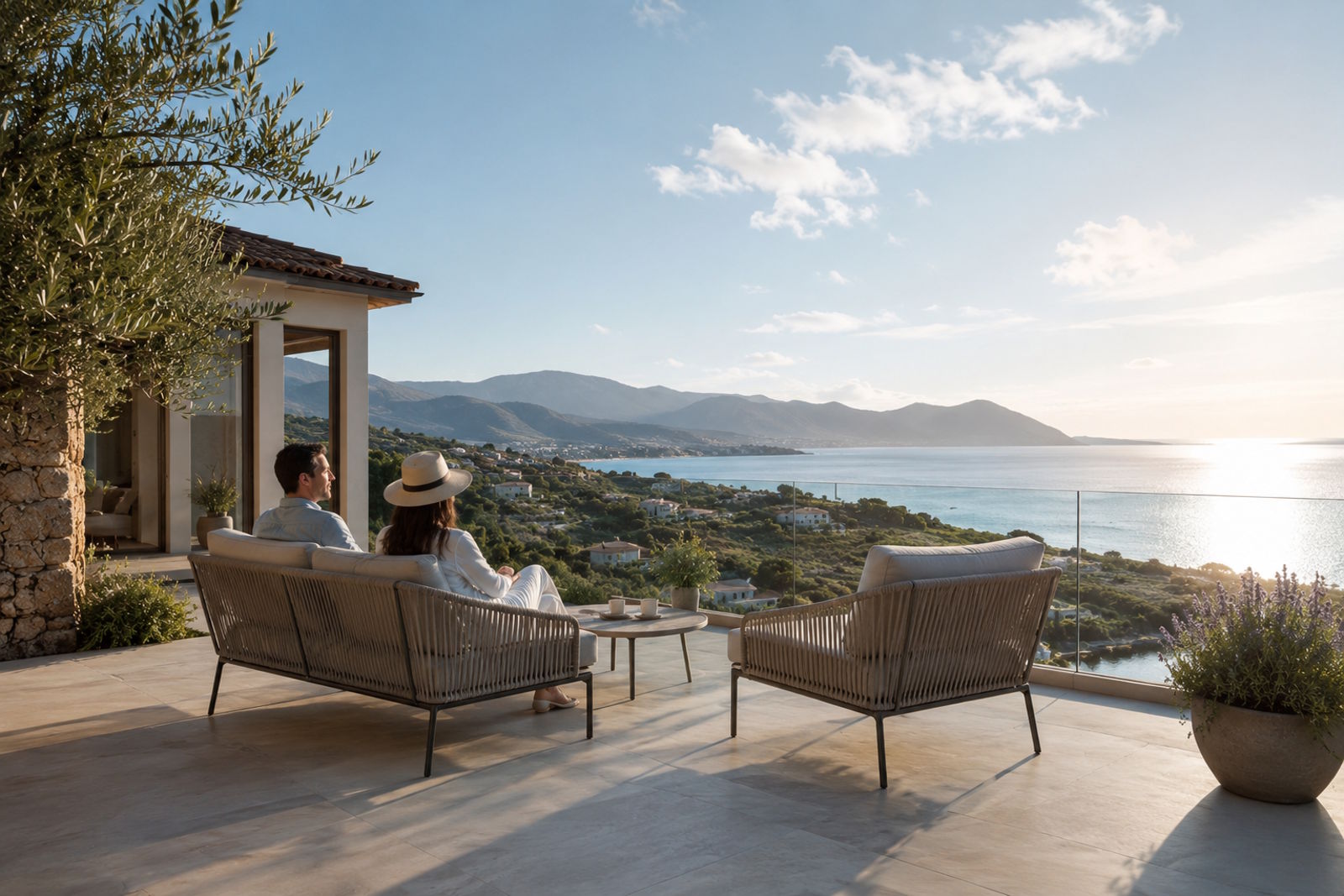
When planning retirement abroad, many dream of palm trees, warm evenings, and year-round sunshine. Yet the daily reality in warmer regions reveals a simple truth: finding the right climate is far more complex than just escaping winter—and getting it wrong can affect your comfort, your health, and even your long-term living expenses.
- Climate Shapes Your Daily Life—Not Just Your Utility Bills
- Most People Choose a Country. Experienced Buyers Choose a Microclimate.
- Climate and Healthy Aging: Listening to Your Body
- Rising Energy Costs: A Factor for Expat Budgets
- Why Location Often Matters More Than Square Footage
- Exploring Destinations by Microclimate
- Test the Climate Before Making a Commitment
The wish list for retiring overseas almost always follows a familiar pattern. In the search for a better quality of life, affordable living expenses, excellent healthcare, and a picturesque setting top the list. Almost automatically, another phrase follows: “Somewhere warm.”
Enjoying a morning coffee on the terrace in January at a pleasant 75°F without ever thinking about scraping ice off a windshield sounds idyllic. However, many retirees discover that the climate they loved during a two-week holiday feels very different after living there full-time. Initial enthusiasm often fades when the unyielding heat of tropical or arid regions begins to drain energy after a few months, quietly restricting daily mobility.
Climate Shapes Your Daily Life—Not Just Your Utility Bills
Many people judge a country based on the weather they experienced during a brief vacation. In retirement, however, you are not spending two weeks there; you are building a new foundation for your everyday life. The essential question should rarely be how warm a location is on average, but rather how you intend to spend your waking hours.
If you enjoy morning walks, an afternoon round of golf, spending time in the garden, or unwinding on the patio with a glass of wine, extreme heat and dense humidity can bring an unwelcome surprise. Outdoor living suddenly retreats indoors. Walks are confined to early mornings, terraces remain empty during the day, and simple errands become physically exhausting. While some individuals genuinely thrive in tropical warmth, it is vital to determine whether a given climate genuinely supports the everyday routine you envision.
Most People Choose a Country. Experienced Buyers Choose a Microclimate.
The biggest mistake prospective expats make is evaluating weather on a national or regional scale. They research Portugal, Greece, or Thailand as if climate were uniform within borders. In reality, two locations separated by only a few miles can offer entirely different living environments.
- Elevation Matters: Moving just 1,000 feet up a hillside can lower temperatures noticeably and bring refreshing evening breezes, altering daily comfort far more than moving 300 miles down the coast.
- Coastal Proximity: A residence positioned 300 yards from the ocean benefits from thermal air circulation that keeps terraces comfortable, while a home located just two miles inland behind a ridge can trap still, oppressive heat.
- Regional Orientation: The northern side of an island or peninsula often experiences dramatically different wind currents, humidity, and rainfall patterns compared to its southern coast.
Understanding microclimates transforms how you look at real estate. It shifts the focus from superficial rankings toward finding the precise pocket of land where daily life feels effortless.
The Fine Interplay of Climate Elements
Whether a climate feels liberating or oppressive rarely depends on the number on the thermometer alone. Comfort is determined by the delicate balance between temperature, humidity, solar radiation, and natural wind.
A clear illustration can be seen when comparing two popular regions. Standing on the Greek coastline at 88°F while a steady summer breeze sweeps across the bay feels wonderfully refreshing. The exact same 88°F paired with 85 percent humidity in Southeast Asia, however, settles over the day like a heavy, damp blanket, making even light physical movement noticeably taxing.
Climate and Healthy Aging: Listening to Your Body
Beyond personal lifestyle choices, there is a physiological dimension that deserves careful consideration when selecting a retirement home. As the human body ages, its ability to thermoregulate changes. Older adults often sweat less efficiently, are more sensitive to dehydration, and may take medications that affect heat tolerance.
When nights remain warm and humid for extended periods, sleep quality can suffer significantly. Cooler evening hours and natural air circulation throughout a home are rarely a matter of mere luxury; they are essential components of long-term health, physical recovery, and well-being.
Rising Energy Costs: A Factor for Expat Budgets
Living in a region that requires continuous artificial cooling creates a long-term dependency on energy grids. Homeowners who must run air conditioning units around the clock naturally react with far greater sensitivity to rising electricity rates than those who can rely on natural ventilation.
Because energy prices in many popular expat destinations are regulated by local governments or subject to shifting subsidies, property owners have virtually no control over cost adjustments. What begins as a minor price increase can gradually evolve into a noticeable annual operating cost for homes that lack energy-efficient orientation or airflow.
Why Location Often Matters More Than Square Footage
Whether you are evaluating a historic country home or a modern residence from a developer, microclimates and site placement play a decisive role in everyday comfort. Two properties with identical floor plans can feel completely different in practice.
Older, traditional homes in rural areas were frequently built on larger plots and positioned strategically to capture prevailing wind patterns while shading living areas from intense afternoon sun. In modern, high-density neighborhoods, structures can inadvertently block natural air corridors, trapping heat between walls. Thoughtfully planned developments and quality renovations counteract this by integrating natural cross-ventilation, generous overhangs, and modern insulation to create a balanced indoor environment without total reliance on machinery.
Exploring Destinations by Microclimate
When looking beyond standard tourist postcards, matching specific microclimates to your personal lifestyle opens up compelling regional alternatives:
The Canary Islands & Madeira (Mild & Balanced)
The Atlantic trade winds help moderate summer temperatures across the Canary Islands, making outdoor living comfortable throughout much of the year without severe heat spikes. Similarly, Madeira’s mountainous topography creates distinct microclimates, allowing residents to choose between coastal ocean breezes or cooler, lush hillside temperatures just minutes away.
Coastal Uruguay (Gentle Ocean Seasons)
An underrated option for retirees seeking mild weather, coastal Uruguay offers a temperate maritime climate where steady Atlantic breezes soften the summer heat. The distinct yet gentle seasonal shifts provide a refreshing rhythm to the year without harsh winter cold.
The Greek Islands & Coastal Spain (Dry, Breezy Heat)
In Greece, seasonal summer winds like the Meltemi sweep across coastal areas, providing powerful natural cooling even during peak summer temperatures. Along Spain’s Costa Blanca, the unique microclimate created by coastal salt lakes and surrounding mountains yields low humidity and exceptionally stable, healthy weather.
Thailand & Malaysia (Tropical Coastal Pockets)
For lovers of year-round tropical warmth and warm ocean waters, Southeast Asia remains deeply attractive. However, successful long-term living relies on selecting properties in coastal corridors or elevated plots where steady sea winds continuously circulate through the living spaces.
Test the Climate Before Making a Commitment
There is no universally perfect climate—only the microclimate that aligns with your health, your lifestyle, and your vision of daily life.
Before making a final commitment or signing a purchase contract, consider renting a residence during the most challenging weather season of the year rather than visiting during peak tourist months. Experience the location during its hottest, driest, or most humid weeks. Pay attention to natural breezes, outdoor shade, and how the home breathes without constant air conditioning.
Your retirement home should encourage the life you imagined—morning walks, afternoons outdoors, evenings on the terrace, and the simple pleasure of enjoying your surroundings naturally. Choosing the right climate is one of the most important steps toward making that vision a reality.