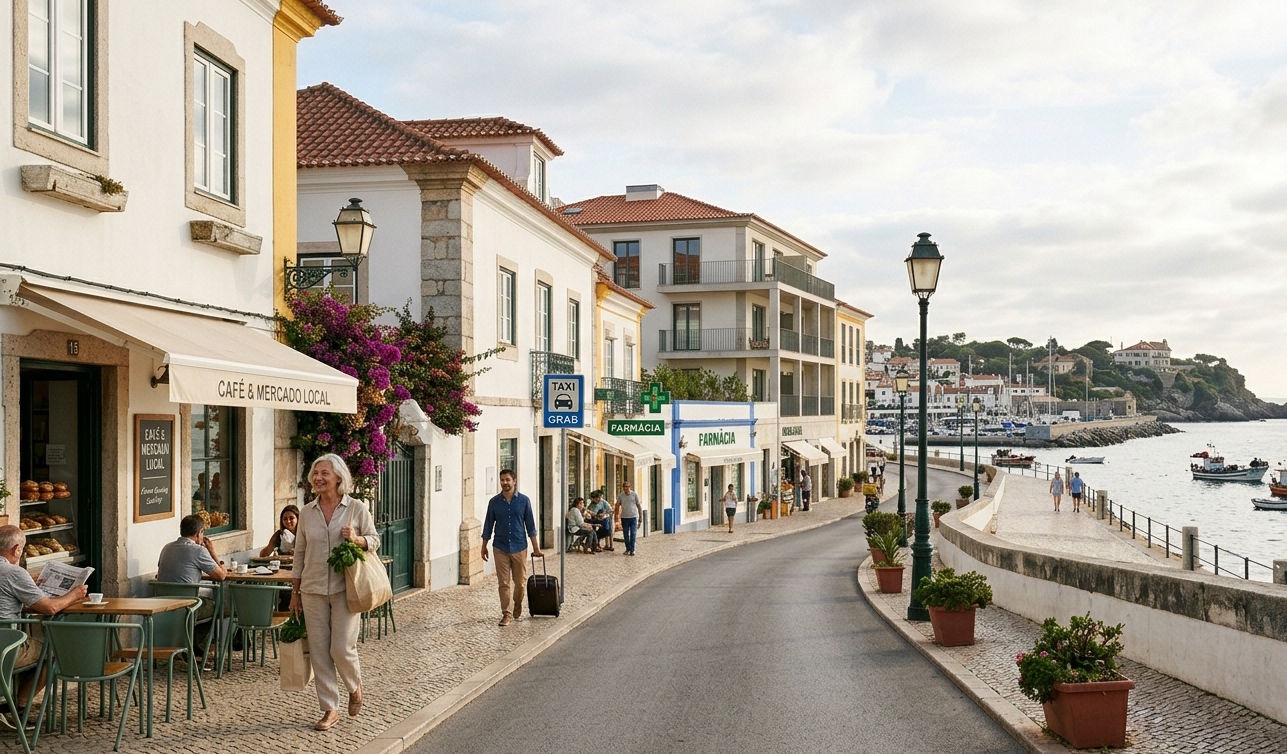
For generations, the global real estate market has been defined by a singular pursuit: the perfect plot. We were trained to look for privacy, grand views, and separation from the crowd. If a property felt like a fortress or a sanctuary at the “edge of the world,” it was considered the ultimate luxury.
But as the demographics of high-end travel and migration shift, the metrics of what makes a location “valuable” are changing. Buyers are no longer just asking, “How far is the beach?” Increasingly, they are asking: “How far is the pharmacy, the grocery store, or reliable transportation?”
The Tuesday Morning Test
It is easy to fall in love with a property on a sunny Sunday afternoon. The true test of a location, however, is how it feels on an ordinary Tuesday morning. Does the grocery delivery arrive? Can you get a taxi when you need one? Can you walk to a café, a pharmacy, or a local market?
A beautiful view may enhance a weekend, but reliable transportation, walkable amenities, and everyday connectivity have a far greater impact on long-term quality of life. In destinations such as Cascais, Porto, or parts of the Algarve, walkability and access to everyday services have become part of the inherent appeal. You aren’t just buying a villa; you are buying into a community where the daily rhythm—a walk to the morning paper, an easy dinner, a quick errand—is supported by the environment itself.
Planning for the Next 25 Years
None of this suggests that secluded properties have lost their appeal. Privacy, silence, and exceptional scenery remain highly desirable. However, we are seeing a shift in how buyers evaluate these assets. They are increasingly viewing their real estate through a broader lens: Are they planning for the lifestyle they have today, or the realities they will face in the next 25 years?
A property may be purchased for the energy of a 35-year-old, but it is often lived in for the needs of a 70-year-old. As populations age and more people embrace long-term stays, seasonal living, and second-home ownership, accessibility is increasingly viewed as an asset in its own right. The ability to walk, connect, and access essential services without constant dependence on a car is becoming a meaningful part of a property’s long-term value proposition.
The Rise of the Managed Residence
This shift toward accessibility has also revitalized the appeal of the well-managed condominium or serviced residence. Often situated in the heart of these walkable, connected districts, the modern condo offers a different kind of freedom. By shifting the burden of maintenance to professional management, these properties allow owners to enjoy the surrounding infrastructure without the logistical demands of a detached home. For the buyer who values a “soft landing”—a place that is ready to live in the moment you arrive—the central, serviced residence is increasingly becoming the antidote to the isolation of the remote villa.
Balancing Privacy and Access
The future of desirable real estate does not necessarily belong to the most isolated locations, nor does it demand that everyone move into the center of a bustling city. Instead, it belongs to properties that successfully balance the privacy of a sanctuary with the accessibility of a functioning neighborhood.
As you explore your next investment or residence, consider the surroundings as carefully as the architecture. The most valuable infrastructure your property will ever have might not be found within your fence line—it is found in the streets, services, and community life that lie just beyond your door.